
Cell and gene therapies represent the frontier of medicine – personalized, potentially curative treatments that are manufactured for a single patient. But the operational complexity of delivering these therapies is staggering. From patient identification to apheresis, from manufacturing to quality release, from logistics to infusion – every step involves multiple stakeholders, strict timelines, and zero margin for error. The companies that will win in CGT are not just the ones with the best science. They are the ones with the best operational intelligence.
The CGT Operational Challenge
Unlike traditional pharmaceuticals, cell and gene therapies require an end-to-end patient journey that spans five or more functional areas: commercial operations, quality assurance, patient care coordination, finance, and logistics. Each function operates on its own systems, tracks its own milestones, and reports through its own hierarchy.
This creates a fundamental visibility problem. When a patient’s apheresis is scheduled, the commercial team may not have visibility into manufacturing timelines. When a quality release is delayed, the logistics team may not know until it is too late to reschedule the infusion. When a financial authorization is pending, the care coordination team may not have the context to accelerate the process.
The result is manual reconciliation, phone calls, emails, and spreadsheets – all attempting to connect information that should flow automatically.
Building a Connected Order Management Dashboard
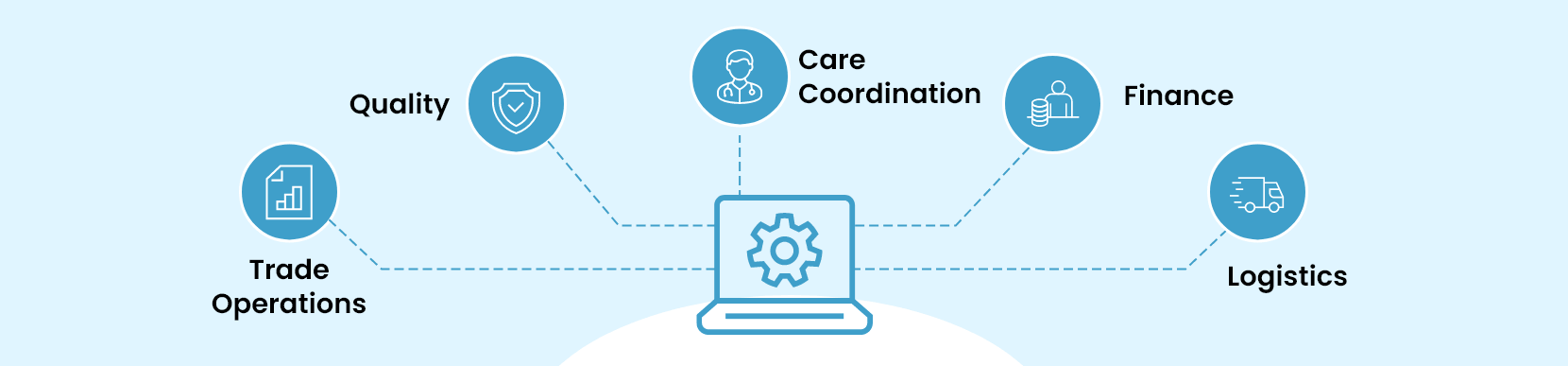
A connected order management system brings all milestones – from order placement through infusion – into a single real-time dashboard. Every stakeholder sees the same information, updated automatically, with alerts and escalation logic built in.
One leading biotech implemented this approach with Infocepts. The company built a centralized dashboard that integrated patient and order milestones across Trade Operations, Quality, Care Coordination, Finance, and Logistics. The system provided real-time tracking of every patient’s journey, with automated alerts for milestone delays and escalation triggers for critical path items.
The impact was significant: approximately 30 percent improvement in operational efficiency, elimination of manual reconciliation, and real-time access to apheresis and infusion milestones across all five functions.
Critical Design Principles
Effective CGT order management systems follow three design principles. First, single source of truth – every function accesses the same data, with no reconciliation required. Second, real-time updates – milestone data refreshes continuously, not in daily or weekly batches. Third, intelligent alerting – the system proactively identifies delays, bottlenecks, and at-risk patients instead of waiting for someone to check a dashboard.
These principles may sound simple, but implementing them in the regulated environment of cell and gene therapy requires deep domain expertise and careful attention to data governance, audit trails, and compliance requirements.
The Future of CGT Operations
As the CGT pipeline grows, operational complexity will only increase. Companies launching multiple CGT products simultaneously will need order management systems that can handle cross-product patient journeys, multi-site manufacturing, and global logistics coordination.
The organizations that invest in connected operational intelligence now – rather than trying to manage complexity with manual processes – will have a significant competitive advantage as the market expands.

Barinder brings over 30 years of experience across life sciences and technology, spanning pharmaceutical organizations as well as global technology leaders...
Read Full BioRecent Blogs

Why Every Point Solution You’ve Bought Is Making Your Revenue Problem Worse
March 31, 2026

The $1.5 Million Question: What Does 24×7 Ad Operations Intelligence Actually Buy You?
March 27, 2026

Improving Patient Adherence with Real-Time Analytics: A Data-First Approach
March 25, 2026

Your Content Library Is Worth More Than You Think. Here’s Why You’re Not Capturing That Value.
March 24, 2026
Infocepts