
Every pharma commercial leader talks about omnichannel. But most organizations are still measuring channels in isolation – digital over here, field force over there, medical engagement somewhere else entirely. The result is a fragmented view of HCP engagement that makes it impossible to optimize the total investment. True omnichannel analytics is not about measuring more channels. It is about understanding how channels work together to influence behavior.
The Omnichannel Measurement Gap
The average pharma company invests across eight to twelve engagement channels simultaneously: personal selling, peer-to-peer programs, medical congresses, digital advertising, email campaigns, webinars, clinical data presentations, patient education, social media, and more. Each channel typically has its own measurement framework, its own success metrics, and its own team responsible for optimization.
This creates what we call the omnichannel measurement gap. You know how each channel performs individually, but you have no idea how they perform as a system. You cannot answer questions like: does a digital touchpoint before a rep visit increase prescribing? Does MSL engagement with a KOL affect that KOL’s influence on surrounding HCPs? Does patient support outreach from the hub complement or conflict with field force messaging?
These are not academic questions. They directly determine how you allocate tens of millions of dollars in commercial spending. And most pharma companies answer them with intuition rather than evidence.
Building an Omnichannel Analytics Framework
An effective omnichannel analytics framework has four layers. The first is data unification – bringing together engagement data from all channels into a single, governed model. This means CRM data from Veeva, digital engagement data from marketing automation platforms, congress attendance data, medical interaction data, and patient support data – all linked at the HCP level.
The second layer is affinity modeling. Not all HCPs respond to the same channel mix. Some prefer digital engagement. Others respond primarily to peer influence. Some are highly receptive to clinical data presentations. Affinity modeling uses historical engagement and response data to understand each HCP’s channel preferences and optimal contact frequency.
The third layer is attribution. This is where most omnichannel programs fail. Traditional last-touch attribution gives all credit to the final interaction before a prescribing event, ignoring the influence of earlier touchpoints. Multi-touch attribution models distribute credit across the full engagement journey, revealing which combinations of channels drive the highest return.
The fourth layer is optimization. Once you understand affinity and attribution, you can dynamically reallocate resources across channels. This means shifting marketing spend from low-performing digital campaigns to high-performing peer programs, adjusting call frequency for HCPs who prefer digital engagement, and coordinating field and medical touchpoints to avoid message fatigue.
Real-World Impact
A global biopharma company implemented this four-layer framework with Infocepts. The company had been measuring channels independently and making allocation decisions based on individual channel metrics. After building the omnichannel analytics framework on Snowflake, they discovered that certain digital touchpoints significantly amplified the impact of subsequent rep visits – but only for specific HCP segments.
By reallocating marketing spend based on these cross-channel insights, the company improved campaign ROI and achieved meaningfully better HCP targeting precision. The field force was no longer operating blind to digital engagement history, and marketing was no longer operating blind to field force activity.
The Organizational Challenge
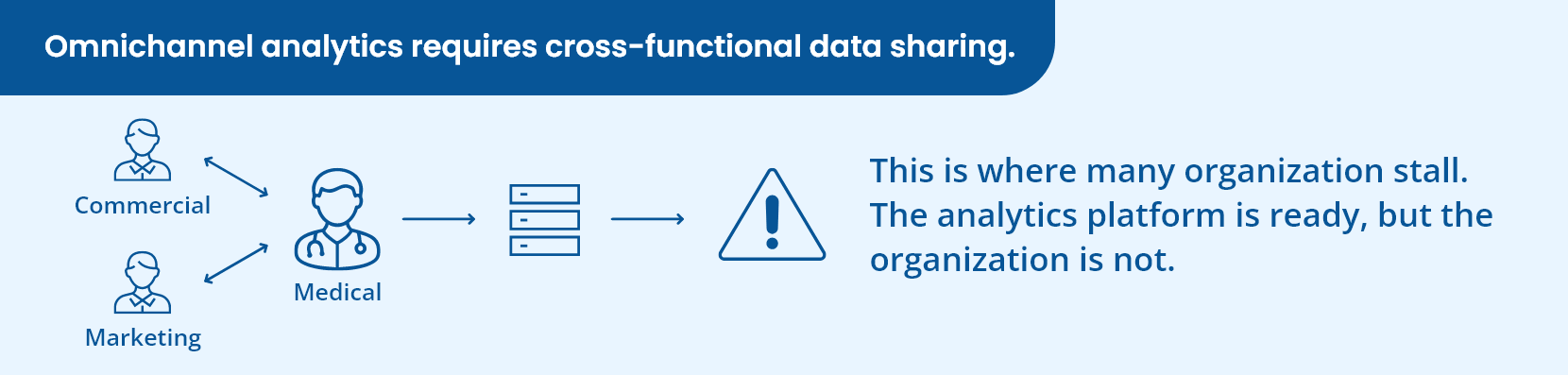
The technical challenge of omnichannel analytics is significant, but the organizational challenge is often greater. Omnichannel analytics requires cross-functional data sharing, which means commercial, medical, and marketing teams need to agree on shared definitions, shared metrics, and shared governance.
This is where many organizations stall. The analytics platform is ready, but the organization is not. Successful implementations invest as much in change management and adoption as they do in technology. They create shared KPI frameworks, they build cross-functional analytics review processes, and they invest in training that helps commercial teams understand and act on connected insights.
Moving Forward
If your organization is ready to move from channel-level measurement to true omnichannel analytics, start with three steps. First, conduct a data inventory across all engagement channels and assess the feasibility of HCP-level linkage. Second, build a pilot with two to three channels to test cross-channel attribution before scaling. Third, invest in organizational readiness – shared governance, shared metrics, and shared decision-making processes.
The payoff is substantial. Companies that achieve true omnichannel analytics consistently outperform those that measure channels in isolation. The question is not whether to invest in omnichannel analytics, but how quickly you can get there.
Recent Blogs

The Currency Wars Are Here. How Do You Walk Into Upfront With One Measurement Story?
March 30, 2026

Your AI Vendor Is Selling You a Dashboard. Here’s What Real Sales Intelligence Actually Looks Like
March 15, 2026

Why Pharma Commercial Teams Need a Connected Intelligence Layer – Not More Dashboards
March 7, 2026

The 90-Day Drug Launch Intelligence Playbook: What Leading Biotechs Do Differently
March 5, 2026
Infocepts