
Medication adherence remains one of the most stubborn challenges in healthcare. Across therapeutic areas, approximately 50 percent of patients do not take their medications as prescribed. For pharma companies, this represents billions in lost revenue and, more importantly, millions of patients who are not receiving the full benefit of their therapy. The solution is not more patient education. It is better patient intelligence.
Why Traditional Adherence Programs Fall Short
Most patient support programs take a one-size-fits-all approach. Every patient gets the same outreach cadence, the same messaging, and the same intervention timing. This approach ignores the fundamental reality that different patients face different barriers to adherence – cost, side effects, complexity, forgetfulness, lack of perceived benefit, or simply confusion about their treatment regimen.
The result is that support specialists spend as much time reaching out to patients who are already adherent as they do reaching patients who are at high risk of discontinuation. Resources are spread too thin, and the patients who need the most support often do not receive it in time.
The Real-Time Prioritization Model
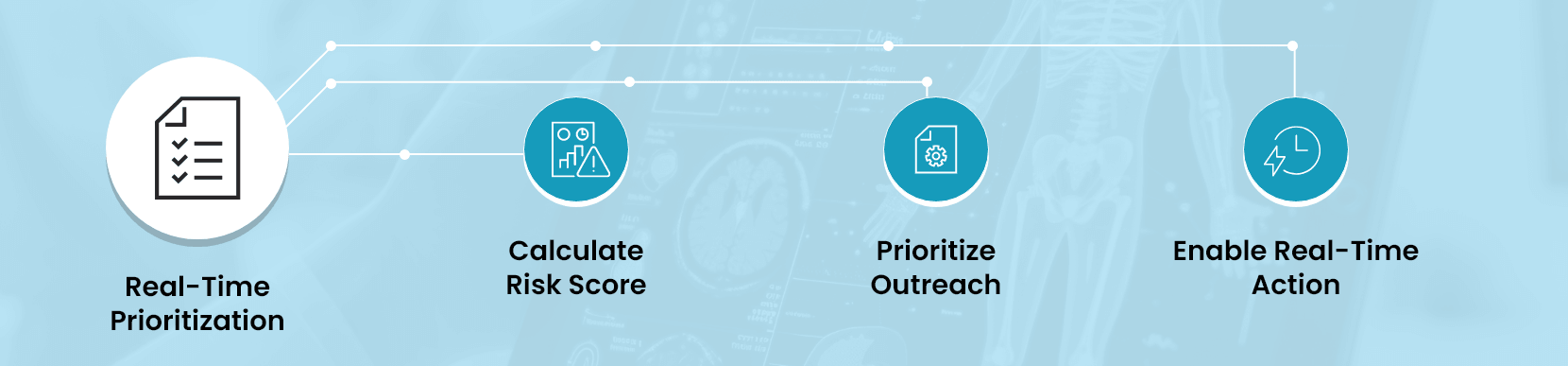
A data-first approach to adherence starts with real-time patient prioritization. Instead of treating all patients equally, the system uses prescription fill data, engagement history, demographic factors, and therapy complexity to calculate a dynamic risk score for each patient. Patients at highest risk of non-adherence are prioritized for immediate outreach.
One leading biotech implemented this model with Infocepts. The company built a real-time prioritization dashboard that automated patient ranking based on multiple risk factors. The system refreshed every 15 minutes and was embedded directly into Salesforce, so that patient support specialists could see their prioritized outreach list without leaving their workflow.
The impact was meaningful: approximately 110 specialists were enabled with real-time intelligence, and patient adherence improved by approximately 5 percent. While 5 percent may sound modest, across a patient population of thousands, this translates to hundreds of additional patients receiving the full benefit of their therapy – and significant commercial value.
Predictive Adherence Models
Beyond real-time prioritization, advanced organizations are building predictive adherence models that can forecast discontinuation before it happens. These models use machine learning to analyze patterns in prescription fill data, identifying early warning signals – a delayed refill, a change in dosing pattern, or a gap in pharmacy claims – that predict upcoming non-adherence.
When these signals are detected, the system automatically triggers a targeted intervention: a phone call from a support specialist, a reminder message, a pharmacist consultation, or an insurance assistance referral. The key is timing – intervening before the patient has fully disengaged, not after.
Integrating Patient Intelligence with Commercial Analytics
The most advanced patient support programs connect patient adherence intelligence with broader commercial analytics. When a field representative visits an HCP, they should have visibility into the adherence patterns of that HCP’s patient panel. This enables more meaningful conversations about treatment persistence and allows the rep to share resources that address specific adherence barriers.
This integration requires a connected intelligence layer – a shared data architecture that links patient support data with CRM, field activity, and medical engagement data. Without this connection, patient support operates in a vacuum, and field teams have no visibility into the patient experience.
Building a Data-First Adherence Program
If your organization is ready to modernize its patient adherence approach, start with three steps. First, build a real-time patient risk scoring model based on fill data, engagement history, and demographic factors. Second, embed this intelligence directly into the workflows of patient support specialists – not in a separate dashboard, but in the tools they already use. Third, connect patient adherence data with commercial analytics so that field teams and market access teams have visibility into the patient experience.
The companies that treat adherence as a data problem – not just a patient education problem – will achieve meaningfully better outcomes for their patients and their business.
Recent Blogs

Why Every Point Solution You’ve Bought Is Making Your Revenue Problem Worse
March 31, 2026

Cell & Gene Therapy Order Management: Connecting the Complex Patient Journey
March 29, 2026

The $1.5 Million Question: What Does 24×7 Ad Operations Intelligence Actually Buy You?
March 27, 2026

Your Content Library Is Worth More Than You Think. Here’s Why You’re Not Capturing That Value.
March 24, 2026
Infocepts