Shashank Garg 00:02
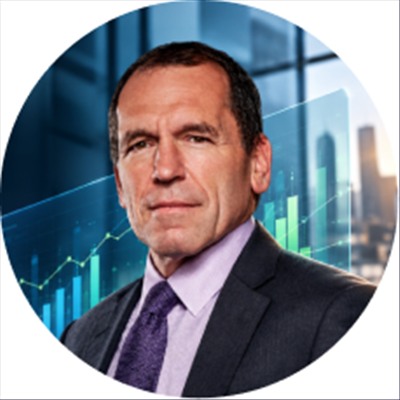
Hello everyone and welcome to The Intelligent Leader Podcast. I’m your host Shashank Garg and today we have with us Pete Cherecwich, Chief Operating Officer at Northern Trust based out of Chicago and he has a wealth of knowledge managing complex client relationships in the financial services domain. Before joining Northern Trust in 2007 as the Head of Institutional Product and Strategy, he was with State Street Bank where he excelled in various executive and operational positions. Fun fact, Pete is also a founding member of the US Soccer Champion Circle. It’s an honor to have you on the show Pete, welcome.
Pete Cherecwich 00:41
Great thanks, appreciate the opportunity to be here Shashank, hopefully we’ll have a good session.
Shashank Garg 00:46
Absolutely, Pete just to kick things off we all know that AI and data has the potential to deliver significant value for the banks and today we are here to explore and talk about the role of data and AI in financial services particularly and how it is transforming decision making especially for leaders like you. We’ll talk about some real world use cases, share insights from your experiences and discuss practical lessons and tips that can benefit both business and tech leaders. I’m looking to learn a lot from you Pete and looking forward to exchanging ideas here. Before we dive in Pete, could you just tell us a little more about your role and what sort of drives you professionally?
Pete Cherecwich 01:35
Sure, so I like to explain what we do by this saying that if everyone has a 401k plan, maybe you have a pension plan or your parents have a pension plan. Our job is to make sure that the statement you get where it says you have $50,000, that that number is accurate, that there’s real assets behind that number and most importantly that we give data to all the individuals that are making decisions to improve that balance for you and get better returns. Said another way, we’re master plumbers of the financial services industry. So I’ll start there and then what drives me professionally Shashank, I love to learn, I love to compete and win and fundamentally I like coming up with solutions to solve client problems. That solutioning is something that always gets the juices flowing.
Shashank Garg 02:27
That’s awesome and good to hear and especially the work you everybody at Northern Trust is doing for everyone else out there. Pete, I was reading a recent sort of data and AI analytics leadership survey and what caught my eye is that while we all talk about the value we create in with data and AI tech, right? That about 92% of the data leaders believe that their data products are delivering business value. However, if you ask the same question to business leaders like yourselves, only 39% of the leaders felt the same and this gap has existed ever since I started my career two decades ago and that’s what sort of drives us at InfoCepts to ensure that this, we are able to bridge this disconnect and help organizations sort of truly leverage data for better outcomes. Personally, I am very passionate about this and I would love to hear your perspective as a business leader on why this gap exists and how you’re navigating it maybe in your businesses but before I get there, just curious to, you mentioned you like to learn a lot, so what do you do to stay on top of the latest and best in tech especially in the world of data and AI?
Pete Cherecwich 03:45
I’ll be honest, it’s twofold. One is good old-fashioned YouTube and other tools that you can watch videos and just keep up to date, so if you hear a word, you don’t understand it, I just watch it and learn and the other frankly is talking to peers, networking and especially peers in other industries because you find that other industries help you understand what your industry might not be doing and others have already figured out.
Shashank Garg 04:15
Actually, for me, in my role as the CEO of InfoCepts, I have the unique opportunity to talk and learn to a lot of our clients and prospects, sort of my role gives me that benefit but personally for me as well, I love connecting in smaller settings, roundtables, inner circle dinners and conversations like these and I’m really excited to have this dialogue on the challenges you are seeing today in the use of data and AI in financial services. So speaking about challenges, as you described, right? Data’s role is key in sort of asset management and overall financial services, right? And I’m sure you’re dealing with lots and lots of data. What would you call out or some of the challenges you see in effectively utilizing data and maximizing its value?
Pete Cherecwich 05:10
So there’s a lot of challenges but let me split data in two. So in financial services, there’s data that’s your product, right? So you actually produce data and you use data and then you have data you use to run your company just like maybe if manufacturing a bottle of Coca-Cola was my product, right? So I’m gonna separate the two out. For data as a product, I would say first and foremost is capturing it. There’s still a lot of places out there where the data is being, we have to capture it based on paper and so we have to actually use OCR technology, use machine learning, push it all through because some organizations are just not ready to give us the data electronically. So capturing is one. Lack of standards. In financial services, there are a lot of organizations that will send you data but they might do it differently. They might want to send it over an email, et cetera. So a lack of standards.
Pete Cherecwich 06:08
It’s funny, I was meeting with one organization, a depository, and we’re talking about blockchain years ago and they said, “Pete, blockchain is interesting but if you all can agree on a standard, I’ll settle trades in 10 seconds.” Don’t worry about real time. Agree on a standard first. Like, okay, that’s good. And the last piece on the product side is really on using data lineage but getting the understanding of what the word means. And the best example I can give you, Shashank, is cash. The client says, “Give me my cash balance.” “Well, what do you mean your cash balance? Is it what’s in the bank right this second? Is it what’s projected at the end of the day? Is it projected right now? The month?” There’s so many definitions of cash, you actually have to get it right. So that’s on the product side. About the business, the challenges for that is actually, we have a sea of data and it’s really trying to understand, not give me lots of data, but what’s my problem? What’s my hypothesis? And give me the data to then use for that versus just having someone produce all sorts of data that is actually fairly useless.
Shashank Garg 07:20
I’m sort of thinking through all our clients and generally in my experience, although you talked about the challenges on the collection and lack of common standards, but at least in financial services, I see that to be slightly better than some of the other industries like retail, CPG, and maybe even pharma, right? I think that the problem is a little more worse. But on the consumption side, and as you talked about, being able to. There’s lots and lots of data, but what’s my hypothesis? And just give me the data to serve that. What’s interesting is, I’m sure you must be starting to do that at Northern Trust as well, but we are starting to see the use of AI and especially generative AI. We have a decision intelligence platform, Pete, at InfoCepts, we call it Decision360, which is sort of this pre-built functionalities and tool sets to rapidly deploy analytics for particular use cases. So purpose-built for that hypothesis, for that use case, with all the advanced functionalities like blueprinting, scenario planning, role-specific insights, just to make that problem a little bit easier. And clients who are adopting that, we’re starting to see at least some of that go away. But going back to the challenges you mentioned, could you talk a little bit about. Pick some of those and see how are you making things better? What solutions you have in place? What’s worked? What’s not worked? Whatever comes to your mind there.
Pete Cherecwich 08:52
So I’ll take it from running the business, so any business, right? ‘Cause I think that’s easier. And I’ll start with one is, we’re trying to figure out how to use data to measure not only capacity, but where we are. We have waste in the system. And when I say by waste, it’s not people not working hard, it’s actually just pure what we’ve asked them to do is not worthwhile. So we’ve bought this platform called Enlighten. We take all the data feeds in from all the systems that people are using, and then we can see what they’re spending their day on. And so for example, something simple, we realized that they were spending 10 minutes a day clearing out their email inboxes and deleting things because we didn’t make the email inbox big enough, all right? So we needed to increase storage capacity. But then you sat back and said, “Well, why are they doing so much on email?” And so we’re able to sit down and then drive through and eliminate emails. And without the data of actually understanding what people are doing all day long, we couldn’t do that.
Pete Cherecwich 10:00
The next step of that, Shashank, is actually starting to look at how we can move work across groups and do that dynamically and have the system learn about where the capacity models are so that you’re getting the most out of your workforce versus having things done in silos. So that’s one positive. I’ll tell you where we messed up on that. When we first started rolling it out, everyone took offense that we were using data to manage their job. I’m an accountant. Why are you telling me that I should have capacity management? I don’t have anything that’s waste, okay? What are we doing? And so I underestimated the amount of change management that had to go along with that particular rollout.
Shashank Garg 10:47
You’re right, Pete. Just sharing some more experiences from our side. One of the things that stood out in our work with financial services Pete were, we actually developed a customer data platform for a neobank that sort of encompasses both front office and back office teams. It empowers them with real-time insights on stuff like ticket resolution, customer onboarding, the know-your-customer sort of processes. And the fact that these people started getting near real-time insights, they’re able to reduce a lot of the what you call the operational inefficiencies by as much as 80%, right? Just because of the automation that happened there. But doubling down on what you said, right? The whole change management piece of it, right? Do you want to just talk about what could you have done a little differently there on that piece?
Pete Cherecwich 11:48
I should have known upfront that there was gonna be resistance for anyone telling them that what someone’s doing may not be valued. And so, and that’s just, that’s human nature. And so you can automate it. And what I’m saying is not valued is that the client is actually not paying us for that process. So we can automate it. It doesn’t mean you’re not valued. It means the process is not valued. So putting in a change management structure such that we have proper training, we take away that concern about what they’re doing is not valued. We help them through that. That’s really important because adoption of this, right? Becomes key because ultimately, we wanted people to realize, “Oh, they’re taking away through this data the part of the job I don’t like, that’s repetitive or is not adding value so that I can do more clients and more work for things that we get paid for.” That’s a good thing. That sounds easy, very hard to do.
Shashank Garg 12:51
Shifting gears a little bit and wanted to understand from your perspective, obviously, there’s a lot of buzz around AI and generative AI in general. There are studies that claim that organizations that invest in those technologies right away are gonna be X% better in the next three to five years. And in financial services, obviously, being the first one to adopt certain technologies, there are people who are making claims that it is gonna be revolutionary. And are you starting to see examples where you see these things relevant for your business? What’s going on at Northern Trust?
Pete Cherecwich 13:34
Yeah. So I’ll put a statement down there that saying, I do think this is gonna change everything, all right? But it’s kind of like at the beginning of the internet. We don’t know how yet, but you can glimpse some things. And let me give you some examples. I’ll start off by saying a lot of what we do as an organization is checking things. So the amount of pure processing that we do is not so great anymore, right? Pure processing has been automated. You have some robots, you have other things to go there. So what do you spend your time doing? We spend a huge amount of our time doing quality control, double checking. A famous example is if you have a stock split, the price of the security should go down today and it should be in half, right? If you miss time when you post one, you’re gonna have a problem. So those two things should not have an impact on any financial statements ’cause they happen simultaneously. A system can automate that, right? It can automate the check. If you have a fund that’s an ETF that’s supposed to track the S&P 500, it doesn’t take a genius to actually look at the S&P 500 change for that day and say, “Did my fund change the same?” Right? You can do that check.
Pete Cherecwich 14:52
Now, get really, really sophisticated in terms of the types of things you do and learn when you’ve got it wrong, all right? So that ultimately you can keep training the model. So I believe most of what these banks do across the board will be fully automated. We will have models that check all of this. You talk about pace. For better or for worse, don’t know how to think, right? Ultimately, we have to go slow as a regulated entity. I actually have something called, we’ve got a model risk management organization that because I’m a regulated entity, if I build a model, they’ve got to test it and make sure there’s no bias, make sure, right? Everything’s working correctly, et cetera. So in one sense, I need to go as fast as I can because if someone gets to the finish line before I do, they’re gonna be able to do this cheaper and better. The other side, I can’t go so fast because if we make a mistake and we have a problem and all of our client’s data goes out to the web, that’s a big issue, right? So trying to sort of thread that needle of going as fast as you can versus not so fast is our biggest challenge right now.
Shashank Garg 16:05
Makes sense. Just recollecting from our experiences, I’m definitely seeing the three buckets, very clear buckets. One is customer engagement. So things like personalized or virtual trading assistant for your clients, whether it’s corporate or consumers, where it can look at your trading patterns, look at your buying history, your trade history, and then personalize insights. I think the amount of personalization AI can achieve can be quite unparalleled. In fact, we did a pilot with a large bank, just deep learning, transformer-based sort of neural network, which continuously monitors, analyzes data and tries to mirror human decision-making without having those biases.
Pete Cherecwich 17:01
By the way, that’s fantastic on the fraud side as well, as fraud protection gets better and better and better, right? Eliminating false positives as well as protection.
Shashank Garg 17:10
The second bucket obviously is what you’re talking about, streamlining operations. It’s a huge bucket. All the quality checks that you spoke about, all the processing that you do, I think organizations just benefit a lot. Then, you’re right that you have to go slow because the cost of a mistake can be really bad to all your clients and their clients, right? So. Are you? Also in the third bucket obviously we’re starting to see it just boosting productivity for senior roles, for example, around their decision-making. Are you starting to see anything in that bucket yet?
Pete Cherecwich 17:51
So it’s interesting. I’ll bucket that too. So when you talk about senior roles, right? I’ll start with just Microsoft and Copilot, right? So I’m now using Copilot and working through, it can draft my email responses for me. I was joking with someone recently that I need to take a class on how to write a good prompt, all right? Because actually telling Copilot what you want in the email is a skill, okay. And, but as I get better at that, it’s saving more and more time from that perspective. We haven’t got to the point, Shashank, where I can take my core KPIs all right? And drive that through some AI tools. We’re getting there. So we’ve kicked off projects to look at that. For example, if I look at go through risks. So if I take sort of here are all the places where I can have a very high loss because of market movement. And what’s the efficacy of my control structure? And then here’s some scenarios. And can it start to help me predict where I might have a problem and where I might have to invest in order to make sure that I’ve protected, right? From any downside risk of market movement because of a loss or an operational error, et cetera. That’s coming.
Shashank Garg 19:19
That’s hard. I mean what you’re saying is sort of where everybody would want to get to, but just to be able to get enough training data and be able to validate what is predicting is right, that’s hard. And I think everybody will get there eventually, but just as you earlier said, right? That balancing between how much risk you want to take versus how fast you want to move versus the checks and balance is very important.
Pete Cherecwich 19:48
But Shashank, for me, right? As I look at it, one of the questions the board always asks me is, “Pete, are you looking around the corner enough?” Right? So you know your risks today, but are you looking around the corner and saying, “Well, what happens if this happens?” That’s where we need help. I need help looking around corners and then running models to say, “Oh, this could happen.”
Shashank Garg 20:06
Yeah, yeah. One of the things that, just remembering, one of the things that our teams are starting to do, it’s just for just regular reporting data, just talking to the models, like we’ve got a solution, IntelliSeek, right? Where, as you talked about earlier, there’s tons of data and organizations and leaders sort of struggle with, can I just get to the right information at the right time? Just, we’re talking level 101 here, right? I think that has become easier with generative AI now. So that is something that I’m starting to see a lot of our clients solve using IntelliSeek solution, which is sort of this conversational, we call it conversational AI or conversational BI, whatever you want to call it, right? Just to be able to talk to your data. And if you look at the way we were trained from Excel to technologies to tools to look at reports and dashboards, right?
Shashank Garg 21:00
Just taking the next step and making it conversational, at least for me personally, as a business leader and for our clients has been a big change. And we’re finally very happy to see that we all can talk like humans to the system and it’ll talk back like a human and with real data. So that’s at least a good sign there. Pete, just a little bit on the AI side again, right? And talking about managing change. And I was just reading a recent survey, which said that one of the challenges businesses face with AI is knowing where to start with AI initiatives. They feel sometimes when they start, they feel overwhelmed by the sheer number of possibilities. Experimentation can be a hurdle as many organizations struggle with effectively testing AI solution and providing their value before scaling, right? When is it ready to scale out? And obviously long story short leads to the issue that realizing tangible value from AI investments and ensuring that they translate into meaningful outcomes becomes an issue. Are you, any thoughts there on what you guys are doing there and what you’re starting to see your peers do in that?
Pete Cherecwich 22:15
Completely. So I’ll start with just a general philosophy is with a new technology like AI, the research and it can’t be R&D in a lab run by technologists that are gonna do something and then present it back to the business. Doesn’t work. It has to be something that’s driven by the business to say, “Here is my problem. Let’s see. Does this technology help me solve that problem?” And if it does, fantastic, okay? An easy example, right? RFPs. So you can sit down and say, “We wanna use AI.” But the reality is if we say, oh, we would like to create an RFP response, right? Using AI, because we think that it can go much faster, right? Be more complete, et cetera. Fantastic. That can be done. You can then, the technology people can use different techniques to do that, test some things out, but we’ll get business value in the meantime. And so each step can be progressively more complicated and larger, but each step along the way is providing you business value on the investment you’re making. Versus, if I go back to the blockchain days, right? People threw up, 150 people just doing blockchain, but for what? They needed a purpose.
Shashank Garg 23:38
That’s so right. And I’m definitely in your bucket, just starting small with targeted experiments, maintaining clear communication throughout the process, starting with end users first and continuous education is the only way at least the AI projects can succeed. Pete one of the things that we sort of built internally as we looked at all our clients, we call it a fully managed AI experimentation and management platform. So it essentially, think of it something that forces you to do what you were just saying, which is you cannot do an AI experiment until you write down your hypothesis and to be clearly define what data you’re gonna use and the models and then explainability. And does it comply with your ethics framework? And does it check all the boxes around privacy and security, right? And it just, in my mind, as somebody who’s been a data scientist before, I know it sounds like, you’re gonna slow me down, but at least in the financial services industry, it’s absolutely critical, at least in the regulated space, right? That you wanna take something like that approach. Looking just beyond challenges, we know that the pace of innovation is only accelerating. From your perspective, what emerging tech trends do you think will be sort of game changers for financial services just in general?
Pete Cherecwich 25:10
When I think about this, it’s really the culmination of many technologies. And then how do they play together? So if I look at AI, I look at quantum computing, and then I look at blockchain, which then manifests itself in terms of tokenization, all right, which then again manifests itself in terms of digital currencies and things like that. And you have a, you can imagine a financial services industry that is pretty real time, pretty automated, all done electronically, right? And it’s coming. I don’t know when it’s coming, Shashank, but it’s coming. And all these technologies will force standards. Okay, so I talked about before, standards will come because ultimately, like right now, there’s competitors of ours who have their own coin, right? But basically they’re saying, “Hey, come onto our standard and we’ll make it efficient.” But standards will then, even if become interoperable, right? Because someone puts a standard layer on top, whatever, it will keep driving. And I just think that a huge amount of friction is gonna be taken out of this industry.
Shashank Garg 26:21
Well, we all look forward to those days. I like where you ended. All of this sort of coming together has to sort of take out friction in this industry that exists. And I’m a big believer of that. All the trends, whether it’s the rise of AI, blockchain, increasing focus on data, privacy, security, the underlying infrastructure powered by quantum computing. I think at the end of the day, I think what they underscore is a need for organizations to be agile and forward thinking. And I loved my conversation with you and some of the things that you are doing there with sort of balancing the need for experimentation and the right ways of doing things with a focus on value realization. Your advice on sort of staying adaptable and ensuring that that is happening is very valuable. Just to wrap things up, what’s sort of your one piece of advice for business leaders or data leaders who as you know our audiences, right? Especially from a financial services industry?
Pete Cherecwich 27:35
I would say that you must stay close to technology. You don’t have to be the CIO, but unless you can combine the business and the tech and be able to know the art of the possible, ultimately someone else will figure that out and they’ll go past you. So you got to keep learning, got to embrace the change.
Shashank Garg 27:58
Pete, it’s been a pleasure to have you on the show today.
Pete Cherecwich 28:03
Same here.
Shashank Garg 28:03
Your insights on AI, change management and sort of the future trends impacting financial services, incredibly valuable. Thank you for taking the time to share your experiences and expertise with us and our listeners.
Pete Cherecwich 28:17
Thank you for having me.
Shashank Garg 28:18
And to our listeners, we hope you enjoyed this episode of The Intelligent Leader with me, Shashank Garg. If you liked what you heard, please consider sharing with your network using the #IntelligentLeader. And don’t forget to subscribe to our podcast by hitting the subscribe button. You wouldn’t want to miss the next episode. Thanks for tuning in and see you next time.






 Retail & CPG
 Retail & CPG 41:16
 Life Sciences 29:56
