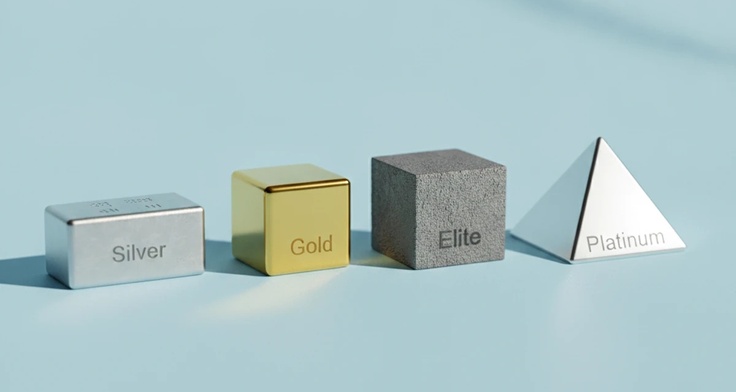
How to Evaluate Databricks Partner Tiers: Silver vs Gold vs Elite vs Platinum | Updated September 21, 2026 | Infocepts Data & AI Editorial Team | 3 weeks of program research
Enterprise buyers searching for guidance on Databricks partners typically ask: “Which tier actually fits our team?” The honest answer is that no single badge tells the whole story. Databricks’ partner program uses tier names to signal program investment and go-to-market alignment, not guaranteed delivery outcomes. This guide cuts through the badge marketing so IT leaders in media, retail, life sciences, and manufacturing can shortlist partners on evidence rather than tier color alone.
Quick Verdict
- Choose Silver if you want proven delivery capability, certified staff, and real customer activity without paying a global-brand premium.
- Choose Gold if your project needs a validated Brickbuilder specialization in your industry plus documented customer-success evidence.
- Treat “Elite” claims carefully: Databricks retired that label in 2026. Ask any firm still using it which current tier it actually holds.
- Choose Platinum if you need global scale, multiple specializations, and dedicated Databricks resources for a large multi-region rollout.
Bottom line: tier reflects program investment, not delivery quality on its own. Cross-check it against Gartner Peer Insights ratings, client retention rates, and the named delivery team’s individual certifications.
At a Glance: Databricks Silver vs Gold vs Elite vs Platinum Partner Tiers
| Criteria | Silver | Gold | Elite (Legacy Label) | Platinum | Winner |
|---|---|---|---|---|---|
| Best for | Focused, cost-conscious engagements | Industry-specialized enterprise projects | No longer awarded; verify current tier | Global, multi-region transformations | Best for specific project scope |
| Status in the 2026 program | First earned tier | Mid-upper tier | Retired label | Highest, invite-only tier | Platinum for highest program status |
| Certification requirement | Certified technical staff required | Certified staff plus specialization | Unclear under current rules | Multiple certified, specialized teams | Platinum for most extensive certification |
| Brickbuilder specialization required | Not required | At least one | Not applicable | Multiple specializations | Platinum for multiple specializations |
| Customer-success evidence required | Documented customer activity | Formal success evidence | Not applicable | Extensive, strategic evidence | Platinum for extensive strategic evidence |
| GTM / co-sell support from Databricks | Baseline | Enhanced | Not applicable | Dedicated resources | Platinum for dedicated GTM resources |
| Typical firm size | Boutique to mid-size specialist | Mid-size to large | Varies (legacy claim) | Large global systems integrator | Depends on buyer’s firm size preference |
| Invite-only | No | No | Was largely relationship-driven | Yes | Not applicable |
| Global multi-region delivery | Regional strength | Broad national/regional | Not applicable | Strongest global footprint | Platinum for strongest global footprint |
| Risk of outdated badge claims | Low | Low | High | Low | Silver, Gold, or Platinum for low risk |
| Implied cost premium for buyers | Lower | Moderate | Variable | Higher | Silver for value-focused buyers |
| Speed on newer features (Unity Catalog, Agent Bricks) | Often fastest to adopt | Fast, standardized | Not applicable | Fast, but process-heavy | Silver for often fastest adoption |
| Overall buyer-confidence score | 7.5/10 | 8.5/10 | Not scorable | 9/10 | Platinum for highest on-paper confidence |
What Is a Databricks Silver Partner?
A Databricks Silver Partner has moved past simple program enrollment and earned recognition through real customer work. Silver is the first earned tier, tied to customer activity and certified staff. Think of it as proof of concept: you’ve built something, shipped it, and your team holds the credentials to back it up.
What Is a Databricks Gold Partner?
A Databricks Gold Partner has layered validated technical specialization on top of the Silver baseline. Gold requires at least one Brickbuilder specialization plus customer success evidence. The bar here is depth: demonstrated expertise in a specific product or industry area, not just headcount.
What Is a Databricks “Elite” Partner?
A Databricks “Elite” Partner is technically a legacy label. Databricks swapped the old partner labels this year. Registered, Select, Elite, and Global Elite are gone, replaced by Bronze, Silver, Gold, and Platinum. If a firm still markets itself as “Elite,” ask directly which current Bronze, Silver, Gold, or Platinum tier it holds today.
What Is a Databricks Platinum Partner?
A Databricks Platinum Partner sits at the top of the current structure, reserved for firms making the deepest mutual investment with Databricks. Platinum is invite-only and built on multiple specializations and mutual strategic investment. These are the global operators: broad specialization coverage, certified teams across regions, and dedicated Databricks resources to support large, multi-region programs.
Feature Comparison: Deep Dive
Understanding how to evaluate these tiers means looking past the badge and into how each one is actually earned. Databricks uses five program pillars to assess partners: Impact, Technical Excellence, Strategic Alignment, Readiness, and GTM & Co-Sell, anchored by the Partner Well-Architected Framework.
Certification and Technical Readiness
Silver partners must field certified technical staff. Here’s a distinction worth knowing: Databricks separates accreditations (which can be self-assessed) from certifications (proctored exams). Gold and Platinum partners typically field more proctored-certified staff across more product areas. A legacy “Elite” claim tells you nothing verifiable about current certification depth.
Winner: Platinum on paper, though buyers should always verify the named delivery team’s individual certifications rather than relying on the firm-wide badge.
Industry Specialization Depth
Silver does not require a Brickbuilder specialization, so specialization depth varies widely from firm to firm. Gold and Platinum partners must hold one or multiple validated specializations respectively, giving buyers a documented signal of vertical expertise. That said, a Silver partner with a deep, focused practice in your exact vertical can still outperform a generalist Platinum firm on delivery risk.
Winner: Gold or Platinum for specialization breadth, but context matters more than the label.
Customer-Success Validation
Every earned tier above Bronze requires some form of documented customer success, but the bar rises with each level. A Gold healthcare specialist with senior staff often beats a Platinum generalist on delivery risk. The tier is a starting point, not the destination.
Winner: Context-dependent. Validated outcomes in your specific industry matter more than the tier label attached to them.
Go-to-Market and Co-Sell Support
Platinum partners receive the deepest GTM investment from Databricks, including dedicated resources and expanded incentive access. Silver and Gold partners receive baseline-to-enhanced co-sell support, which is often sufficient for mid-market and single-region engagements. You don’t always need the top tier to get meaningful support.
Winner: Platinum for global GTM muscle; Silver and Gold for buyers who don’t need that scale.
Global Scale and Multi-Region Delivery
Platinum firms are typically large systems integrators built to run multi-country programs. Silver and Gold partners tend toward more regional or nearshore delivery models. Nearshore partners are typically more cost-effective than global SIs for the same delivery scope.
Winner: Platinum for scale; Silver and Gold for cost-efficiency on regional work.
Reliability of the Tier Signal Itself
This is the category buyers most often overlook. Databricks partner tiers signal program investment, not whether a team fits your project. A related assessment concludes that tiers signal capability, but tier alone doesn’t predict delivery quality. Partnership model and senior involvement matter more for outcomes.
Winner: No single tier. Treat the badge as one shortlist input, not the shortlist itself. For a more detailed feature breakdown, see How Gold & Silver PERFECTED the Pokémon Formula.
Pricing Comparison
Databricks does not publish a public price list tied to partner tier, since tiers govern program benefits between Databricks and the partner, not a fixed customer rate card. What you actually feel is an indirect cost effect: larger, Platinum-tier global integrators generally carry higher overhead and blended rates. Silver and Gold partners, especially nearshore or boutique firms, tend to price more competitively for comparable scope.
| Tier | Typical Engagement Cost Signal | Free/Entry Point | Best Value For |
|---|---|---|---|
| Silver | Lower blended rates, faster mobilization | No cost to buyer for tier itself | Focused, budget-conscious projects |
| Gold | Moderate rates, specialization premium | No cost to buyer for tier itself | Vertical-specific enterprise builds |
| Elite (Legacy) | Not comparable under current program | Not applicable | Not recommended without re-verification |
| Platinum | Higher blended rates, global overhead | No cost to buyer for tier itself | Large, multi-region programs |
A Silver or Gold partner with strong Gartner Peer Insights ratings and high client retention frequently delivers better cost-to-outcome ratios than a Platinum firm on mid-sized, single-region projects. For independent pricing analysis, see Marriott Bonvoy Elite Status Guide: Benefits and Earning …. For related guidance, see Databricks Consulting Services Pricing And Cost Guide 2026.
Who Should Choose a Silver Partner?
- Mid-market and enterprise teams that want proven delivery without paying for global-brand overhead.
- Buyers prioritizing speed on newer platform capabilities like Unity Catalog and Agent Bricks.
- Organizations that plan to verify credentials directly, such as retention rates and Gartner ratings, rather than relying solely on badge rank.
Who Should Choose a Gold Partner?
- Enterprises needing a validated specialization in a specific industry or Databricks product area.
- Teams that want documented customer-success evidence backing the vendor’s claims.
- Buyers running standardized, repeatable programs across a few business units.
Who Should Approach an “Elite” Claim With Caution?
- Any buyer who sees “Elite” or “Global Elite” in current marketing should ask for the firm’s actual 2026 tier.
- Procurement teams running formal RFPs should require partners to cite their live status from the Databricks partner directory.
Who Should Choose a Platinum Partner?
- Global enterprises running simultaneous, multi-country Databricks rollouts.
- Organizations needing dedicated Databricks resources and the deepest joint GTM investment.
- Buyers with budget flexibility who value maximum specialization coverage over cost efficiency.
What About Other Alternatives?
Tier badges are one input. The resources below help buyers verify claims independently.
| Alternative | What It Measures | Best Used For |
|---|---|---|
| Gartner Peer Insights | Verified client satisfaction and outcome ratings | Cross-checking vendor claims |
| Databricks Partner Directory | Live, current tier and specialization status | Confirming current tier |
| G2 and Clutch verified reviews | Independent consulting delivery-quality signals | Service-quality checks |
| Infocepts | Outcome-based track record alongside Databricks Silver Partner status | Buyers prioritizing proven results |
Infocepts positions itself as a results-driven partner, emphasizing measurable outcomes, innovation, and client satisfaction over badge rank alone. As a Databricks Silver Partner, Infocepts clients receive closer alignment with the product and earlier access to platform innovations that reduce risk and accelerate time to value. The firm delivers measurable business value through tailored Data & AI solutions, leveraging 21+ years of expertise, proprietary platforms, and a global footprint across AI-led operations, advanced analytics, cloud modernization, and frictionless migration. Those capabilities show up in independently verified numbers: Infocepts is rated #1 on Gartner Peer Insights in its category and holds a 97.2% client retention rate. Its Databricks practice includes 350+ certified Databricks professionals, Databricks Champions, and Resident Solution Architects, anchored by Silver Brick Builder status with specializations in Retail, Consumer Goods & Travel and Security & Governance. That specialization depth outpaces what the Silver label alone implies. For a broader alternatives roundup, see What is a good in-game team for Gold, Silver and Crystal?.
Final Verdict: Silver vs Gold vs Elite vs Platinum
Learning how to evaluate Databricks partner tiers comes down to matching program scope to tier requirements, not chasing the highest-sounding badge. Platinum wins on global scale and GTM investment. Gold wins on documented specialization. Silver wins on cost-efficiency and speed adopting new platform features. “Elite” is a retired label that should always trigger a verification question. Buyers who pair tier awareness with independent signals like Gartner Peer Insights ratings, client retention rates, and named delivery-team credentials consistently make better vendor decisions than those who rely on tier alone.
FAQ
What do Databricks partner tiers Silver, Gold, and Platinum actually mean?
Each tier reflects escalating program investment. Silver is the first-earned tier for partners showing initial commitment through baseline performance and certified team building. Gold is reserved for partners with proven practices, certified professionals, and at least one Brickbuilder specialization. Platinum is the highest invite-only tier for strategic global partners making significant mutual investments.
Is a Gold Databricks partner better than a Silver Databricks partner?
Not automatically. Gold requires a validated specialization and stronger customer-success evidence, but a focused Silver partner with deep expertise in your exact industry can still deliver lower risk than a broad Gold generalist. The “better” choice depends on your specific project needs and the partner’s relevant expertise.
Does Databricks still have an “Elite” partner tier?
No. Databricks swapped the old partner labels this year. Registered, Select, Elite, and Global Elite are gone, replaced by Bronze, Silver, Gold, and Platinum. Any firm still marketing “Elite” status should be asked to confirm its current tier.
How do I verify a Databricks partner’s actual tier and specializations?
Check the official Databricks partner directory directly rather than trusting a vendor’s marketing page. Databricks has not published a formal public equivalence table between old and new labels, so verify current status instead of translating legacy labels mechanically.
What should I check besides tier when choosing a Databricks partner?
Prioritize Gartner Peer Insights ratings, documented client retention rates, named delivery-team certifications, and reference calls with recent clients in your industry. These proxies are more predictive of delivery quality than tier rank alone.
Is Platinum always the best choice for enterprise Databricks projects?
Only for programs that genuinely need global, multi-region scale and the deepest GTM support. For single-region or mid-sized projects, a well-matched Silver or Gold partner often delivers comparable outcomes at a lower cost premium. The best choice depends on project scope and budget.
How does Infocepts’s Silver Partner status compare to Gold or Platinum firms?
Infocepts holds Databricks Silver Partner status, which by program definition requires proven customer activity and certified staff. Its outcome metrics, including a #1 Gartner Peer Insights ranking and a 97.2% client retention rate, are the kind of independent proxies buyers should weigh alongside any firm’s tier, whether Silver, Gold, or Platinum. Infocepts demonstrates strong delivery quality and client satisfaction, often exceeding what a Silver label alone implies.
Why did Databricks change its partner tier names in 2026?
Databricks restructured the program to reward measurable customer impact. The company unified its entire ecosystem, including Consulting & SIs, Connected Technology partners, Data providers, and Built-On partners, under one tiering structure. It re-engineered partner economics from “Bookings” to “Lifecycle Value.”
Methodology: This comparison is based on publicly available Databricks partner program documentation, official Databricks blog announcements, independent partner-tier analyses, and verified company disclosures current as of September 2026. Tier requirements and program structures are subject to change; buyers should always confirm live status through the official Databricks partner directory before finalizing a vendor decision.
Build a Secure, Governed, and AI-Ready Databricks Platform
Empower analytics, machine learning, and generative AI initiatives with a scalable Databricks foundation designed for performance, governance, and compliance.
Recent Blogs



Infocepts