
Most pharma teams don’t struggle with a lack of data. They struggle with getting life sciences analytics to translate into better launch decisions, sharper targeting, and stronger market performance. Dashboards multiply, yet field teams still ask, “So who should I call on next week?”
If that sounds familiar, the problem isn’t your people. It’s how your commercial analytics are designed, governed, and used. Fix those three, and sales, marketing, and market access teams finally start pulling in the same direction.
Why Commercial Analytics Miss The Mark In Pharma
Pharma analytics programs usually start with great intentions and solid tools, then stall because they focus on reports instead of decisions. The result is busywork: brand teams drowning in Excel exports while critical questions about adoption, access, and messaging stay cloudy.
Common failure patterns show up across large and mid-size companies. Once you know them, you can design life sciences data solutions that avoid the same traps and actually support the way commercial teams work.
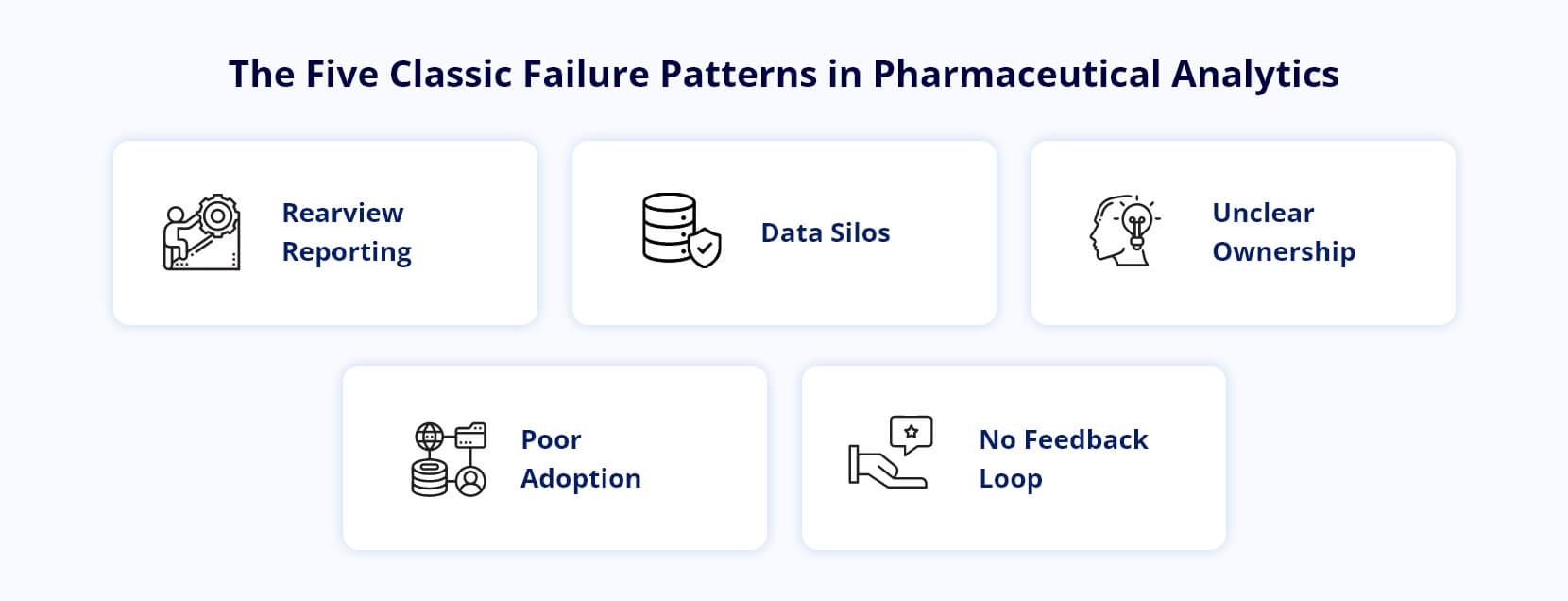
The Five Classic Failure Patterns
First, “rearview mirror” reporting dominates. Teams get beautiful lagging indicators but very little about what to do next. Second, data lives in silos: CRM here, claims there, specialty pharmacy data in a separate portal. Third, ownership is unclear, so no one feels responsible for fixing obvious gaps in pharmaceutical analytics.
Fourth, analytics teams ship tools without thinking through the last mile to the field force. Reps get complex dashboards when they really need three priority calls and two talking points. Fifth, there’s no feedback loop from users, so reports grow, but business impact doesn’t. Commercial intelligence becomes a cost center instead of a growth driver.
Building A Commercial Analytics Foundation That Matters
Before you chase advanced models, you need a reliable, boring foundation. Think of it as commercial plumbing: if your inputs are late, inconsistent, or incomplete, drug launch analytics will only amplify noise. Get the basics right and everything else becomes easier.
The key is to tie data decisions directly to commercial questions: “Which HCPs are most likely to write in the next 90 days?” or “Where are we losing prescriptions in the access journey?” Those questions dictate which sources you prioritize, which transformations you automate, and where you standardize definitions.
Prioritizing Data Sources That Actually Drive Insight
Every company says it wants a single view, then drowns in feeds. Start with the small set of sources that directly affect launch and market performance: claims, EHR, CRM, call activity, formulary, distribution, and, where possible, real-world outcomes. Most teams then layer in healthcare analytics from third-party providers to fill obvious blind spots.
Be ruthless about what makes it into your commercial data model. If a data set doesn’t feed a current or near-term decision, park it for later. Teams that try to wire in everything on day one ship late and lose credibility with sales and marketing leaders.
Data Governance Without The Bureaucracy
Good governance isn’t about long policy decks. It’s about fast, clear decisions on definitions, hierarchies, and timing. For commercial analytics pharma teams, three rules go a long way: a single source of truth for customer master, one shared territory schema, and firm rules for when weekly and monthly data are considered “final.”
That clarity keeps brand teams, finance, and field operations from arguing over which number is “right.” It also gives pharma data analytics teams a clean baseline for modeling, forecasting, and incentive design.
From Static Reports To Adaptive Commercial Intelligence
Once the foundation is in place, the next shift is moving from static reports to adaptive commercial intelligence. The goal isn’t more charts. It’s faster signal detection and more confident decisions about where to spend time and money.
Think in terms of use cases, not tools. Start with 5–7 high-impact decisions in launch and in-market phases, then design analytics around those, with clear owners and usage expectations.
High-Impact Use Cases Across The Launch Lifecycle
For launch, focus on access ramp, HCP activation, early adherence, and channel performance. For in-line brands, focus on competitor moves, guideline updates, and payer changes. Each use case should map to a concrete question and an agreed action, supported by pharma AI where it adds speed or pattern recognition.
For example, a model that flags HCPs whose behavior resembles early adopters in similar therapies can drive targeted non-personal promotion. A different model might spot accounts where claims volume is rising but dispenses are flat, pointing to access or fulfillment issues.
Designing Insights For How Commercial Teams Actually Work
Most field teams don’t want another dashboard. They want an ordered list of actions with enough context to feel confident. That means pushing commercial analytics into the tools they already live in: CRM, field reporting apps, and weekly email summaries.
On the home office side, brand leads, access leads, and sales directors need a tighter link between their decisions and what shows up in reporting. They care less about “model accuracy” and more about, “If we increase non-personal promotion in these 200 accounts, what outcome should we expect in 8–12 weeks?”
Making Drug Launch Analytics A Competitive Advantage
Too many launches still run on spreadsheet gymnastics and anecdote. That’s not just inefficient; it’s risky when you’re placing a multi-hundred-million-dollar bet. The right analytics won’t remove uncertainty, but they can shorten the feedback loop from market signal to strategy shift.
Think of the launch journey as a series of hypotheses. Which segments will move first? Which messages resonate by specialty? Which payer blocks will bite hardest? Effective drug launch analytics force you to make those hypotheses explicit, then test them quickly and transparently.
Practical Launch Analytics Playbook
A solid launch analytics playbook usually includes three phases. Pre-launch, you size and prioritize segments, stress-test assumptions with analog launches, and align KPIs with field and access teams. Early launch, you focus on weekly adoption curves, access wins and losses, and HCP engagement depth.
By months 6–12, the emphasis shifts to persistency, patient journey friction, and competitor responses. At each step, commercial analytics pharma teams should publish a short “what changed, what we’re trying next” summary so leaders see analytics as a living part of the launch, not a static binder.
Turning Analytics Into Daily Behavior In The Field
The best analytics fail if they never leave headquarters. Getting field teams to trust and use insights is as much change management as math. Reps and MSLs want to know why a target moved up or down the list and how it links to their own territory realities.
Start with a handful of “explainable” signals: recent claims trends, formulary wins, peer activity, or gaps in previous calls. Tie those signals to recommended next actions, then track usage patterns alongside commercial analytics pharma KPIs without turning it into a policing exercise.
Coaching, Incentives, And Feedback Loops
First-line managers make or break adoption. If they coach to the analytics, reps will follow. If they ignore it, usage dies within a quarter. Build simple coaching guides that show how to talk through call plans, objection handling, and follow-up using data.
Incentive plans should reward both outcomes and the right behaviors. Some companies track usage of key views or completion of suggested calls as soft metrics early on. Over time, pharma analytics teams can correlate those behaviors with territory growth and refine which signals matter.
Conclusion
Commercial teams in pharma don’t need more data; they need life sciences analytics that are tightly wired to launch decisions, daily field behavior, and real-time market shifts. The companies that win will be the ones that treat analytics as a commercial capability, not an IT project.
If you’re ready to move from static reports to a living commercial analytics ecosystem, partners like Infocepts can help you connect strategy, data, and field execution in a way that actually shows up in your launch and in-market results.
Frequently Asked Questions
Life sciences analytics helps pharmaceutical, biotech, and healthcare organizations transform commercial, clinical, patient, and market data into actionable insights that improve decision-making, market performance, and business outcomes.
Commercial analytics enables pharma teams to identify high-value HCPs, optimize territory planning, improve targeting strategies, measure campaign effectiveness, and prioritize actions that drive prescription growth and market share.
Drug launch analytics helps organizations monitor adoption trends, measure HCP engagement, evaluate payer access, identify market opportunities, and make data-driven adjustments that improve launch success and accelerate commercial performance.
Life sciences analytics typically combines data from claims, EHRs, CRM systems, call activity, formulary and payer information, specialty pharmacy data, patient support programs, and real-world evidence sources.
AI helps identify prescribing trends, predict HCP behaviors, detect market opportunities, optimize promotional strategies, and provide next-best-action recommendations that improve sales and marketing effectiveness.
Commercial intelligence improves customer targeting, accelerates drug launches, enhances market access strategies, increases field force productivity, strengthens decision-making, and helps organizations respond quickly to changing market conditions.
Infocepts helps life sciences companies build scalable analytics platforms, integrate commercial data sources, implement AI-driven insights, optimize launch performance, and create data-driven commercial strategies that accelerate growth.
Unlock Better Commercial Outcomes with Life Sciences Analytics
Enable smarter HCP targeting, stronger launch execution, real-time market insights, and AI-powered decision-making across your organization.
Talk to Our Experts
Frequently Asked Questions
Unlock Better Commercial Outcomes with Life Sciences Analytics
Enable smarter HCP targeting, stronger launch execution, real-time market insights, and AI-powered decision-making across your organization.
The Infocepts Life Sciences COE is a team of domain and data experts working with pharma, biotech, and medical device companies to accelerate data-driven outcomes. The team covers clinical data management, regulatory analytics, commercial insights, and AI applications across the drug development and commercialization lifecycle.
Read Full BioRecent Blogs



Infocepts