Services › Data Modernization Services

Data modernization services

Enterprise Data Modernization Services for Cloud, Analytics & AI

4.9/5

from 55 verified client reviews on Gartner Peer Insights — as of October 2026

Migrate legacy systems, modernize architecture, and build AI-ready data foundations. Infocepts delivers data modernization services in waves rather than big-bang cutovers — then stays to govern and operate what we build.

4.9/5

Gartner Peer Insights, 55 reviews

8

Integrated service areas, run together or alone

5

Platforms we modernize to, chosen by workload

2004

Migrating enterprise data platforms since

Definition

What is Data Modernization?

Data modernization is the structured transition of an enterprise’s data platform, architecture, and operating model from legacy systems to a modern, cloud-native foundation that supports analytics, AI, and real-time decision-making. It encompasses migrating data warehouses, redesigning architecture, automating data pipelines, governing data quality, and reskilling teams to operate in a cloud-first environment.

For most enterprises, data modernization is not a single project. It is a multi-year program that touches infrastructure, applications, governance, and culture. Done well, it reduces total cost of ownership, shortens analytics delivery cycles, and creates the data foundation required for generative AI and predictive ML workloads. Done poorly, it produces lift-and-shift migrations that simply move technical debt to a more expensive platform.

Infocepts’ data modernization services help enterprise data leaders execute the program end to end — strategy through implementation through ongoing optimization. We work across the full stack: cloud migration, modern architecture design, data engineering, governance, and managed operations. Our consultants bring proven playbooks across financial services, healthcare, retail, manufacturing, media and entertainment, including data modernization for media, and partner with the leading data platforms including Snowflake, Databricks, Microsoft Fabric, AWS, and Google Cloud.

A pure cloud migration without modernization typically moves technical debt to a more expensive platform. The question is never whether to move — it is which workloads deserve to.

Infocepts point of view

Data modernization vs. cloud migration

Cloud migration moves infrastructure or applications from on-premise to cloud. Data modernization is broader: it includes cloud migration, and adds architecture redesign, pipeline modernization, governance implementation, and a change to the operating model. One relocates the estate. The other rebuilds how it works.

What changes in data platform modernization

Data platform modernization replaces the storage-and-compute foundation with an elastic, decoupled architecture — lakehouse, mesh, fabric or hub — matched to your workloads. The visible change is cost and speed. The structural change is that AI readiness becomes a property of the architecture rather than a per-project effort. See modern data architecture. In media, audience AI depends on unified, privacy-safe data, which is what the Audience Intelligence Platform works with.

The problem

Why Enterprises Need Data Modernization Services

Data modernization programs typically start in response to one of four pressures. Media and entertainment companies often face several at once, with linear, digital and streaming data on separate stacks; see Infocepts’ media solutions.

01

Legacy platforms cannot keep pace with data volume

On-premise data warehouses and ETL platforms designed for monthly reporting cycles cannot handle the data volume, velocity, and concurrency that modern businesses require. Reports run overnight. Pipelines fail under load. Cost grows linearly with capacity.

02

AI and machine learning workloads demand modern foundations

Generative AI, predictive ML, and real-time decisioning require data that is high-quality, well-governed, and accessible at low latency. Most legacy stacks cannot serve these workloads without expensive workarounds.

03

Total cost of ownership keeps climbing

Maintenance contracts, hardware refreshes, specialist talent, and licensing on legacy platforms compound year over year. Cloud platforms with consumption-based pricing can lower that cost and improve performance, and the readiness baseline puts a number on both for your estate. Streaming workloads make cloud cost control a priority in media; see Cloud FinOps for Media.

04

M&A activity creates unsustainable platform sprawl

Acquisitions add data platforms faster than IT can integrate them. Without modernization, the combined organization runs five flavors of data warehouse and three governance regimes. In media, that includes bringing linear and digital revenue data into one view with AdScape 360.

Where the pressure is really about which decisions the business is trying to improve rather than the platform underneath, that is a data and AI strategy question — and the readiness baseline will say so.

Services

Our Data Modernization Services

Infocepts delivers data modernization across eight integrated service areas. We can engage on any one independently or run the full program.

01

Modern Data Architecture

We design lakehouse, mesh, fabric, and hub patterns matched to your business needs. Architecture work covers reference designs, technology selection, and governance integration.

02

Cloud Migration

We migrate data infrastructure to AWS, Azure, Google Cloud, or Microsoft Fabric. Migration approach includes assessment, dependency mapping, phased execution, and post-migration optimization.

03

Data Migration

We plan and execute the movement of data from legacy warehouses, lakes, and operational systems to modern cloud platforms. Includes schema conversion, validation, cutover planning, and parallel-run risk management.

04

Data Engineering and Integration

We build the pipelines, transformations, and integrations that move data from sources to consumption layers. Engineering work spans batch, streaming, and reverse ETL patterns.

05

DataOps Automation

We automate the build, test, and deployment of data pipelines using DataOps practices borrowed from software engineering. Reduces pipeline failure rates and accelerates delivery from weeks to days.

06

Data Quality

We design and implement data quality programs covering source validation, pipeline monitoring, consumer-facing trust scores, and remediation workflows. In media, AdSentinel applies the same monitoring to ad integrations.

07

Data Governance

We design and operationalize the policies, ownership models, and controls that ensure modernized data is trustworthy. Includes framework design, glossary build-out, stewardship structures, and tool implementation across Collibra, Alation, Atlan, and Microsoft Purview.

08

Data Catalog

We implement enterprise data catalogs that make data discoverable, classifiable, and governable. Implementation covers lineage capture, automated tagging, business glossary integration, and consumer-facing search interfaces. For media companies, a catalog is also what keeps content metadata consistent across series and episodes; see ContentIQ.

Not sure where to start?

Many programs begin with the readiness baseline, because a workload inventory ranked by value and effort helps settle the scope question early. Thirty minutes with a practice lead will tell you whether that applies to you.

The baseline

Modernization Readiness Baseline

Four measures map directly onto the four pressures above. Ten scored areas explain them. The point is to establish which workloads justify the move before anyone commits to a platform.

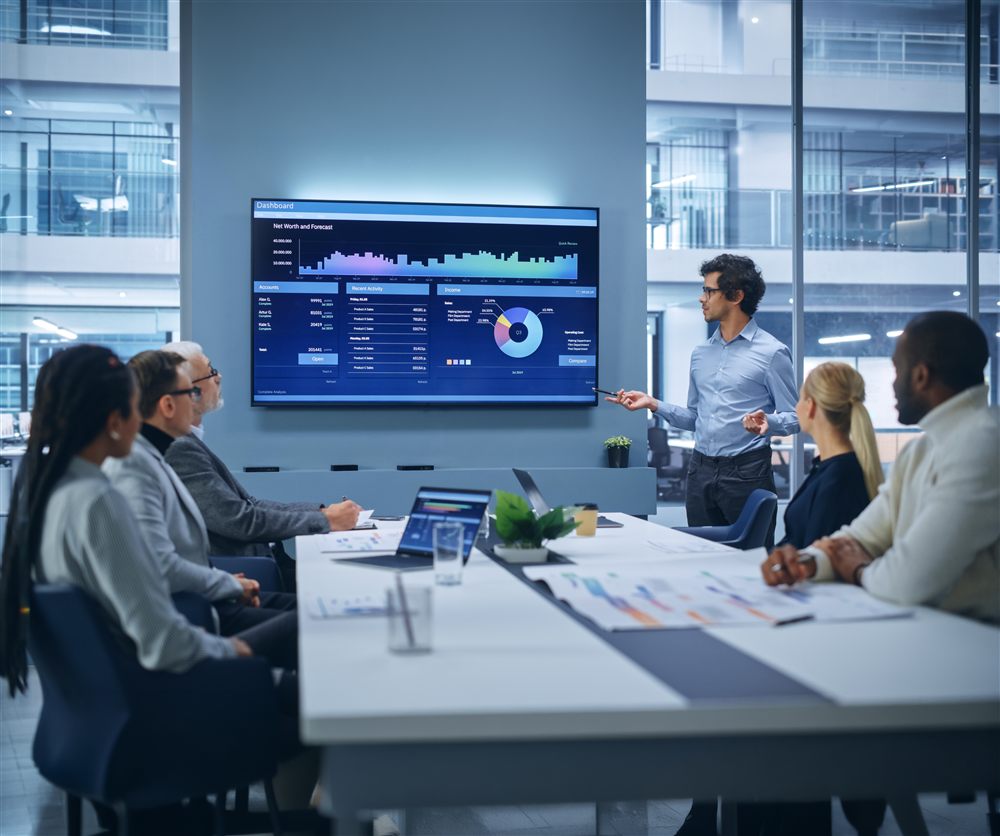
A data leader presenting a platform dashboard to colleagues in a meeting room

M1Platform capability against actual data volume, velocity and concurrency

M2AI readiness of the data foundation — quality, governance, latency

M3Total cost of ownership today, and its trajectory over 24 months

M4Platform sprawl — how many warehouses, lakes and governance regimes you run

Ten areas, scored 1–5Maturity scale:1 Ad hoc2 Repeatable3 Defined4 Managed5 Optimized

PL·01Dimension 1 · Platform

Architecture fit

Whether the current pattern can carry the workloads the business is asking for.

2.0

PL·02Dimension 1 · Platform

Cloud and platform footprint

How many platforms are in use, where they overlap, and what the overlap costs.

2.0

PL·03Dimension 1 · Platform

Pipeline and DataOps maturity

Whether pipelines are built, tested and deployed as engineered software or by hand.

3.0

DA·01Dimension 2 · Data

Data quality

Source validation, pipeline monitoring, and whether consumers trust what arrives.

2.0

DA·02Dimension 2 · Data

Integration and latency

How data moves from source to consumption, and how current it is on arrival.

3.0

DA·03Dimension 2 · Data

AI readiness

Whether the foundation can serve generative and predictive workloads without workarounds.

2.0

GV·01Dimension 3 · Governance

Ownership and policy

Whether critical data has named owners, stewardship, and controls that actually run.

3.0

GV·02Dimension 3 · Governance

Catalog and lineage

Whether data is discoverable and traceable end to end, or known only to its builders.

2.0

OP·01Dimension 4 · Operating model

Cost and consumption management

Whether consumption is monitored and controlled, or discovered on the invoice.

2.0

OP·02Dimension 4 · Operating model

Skills and run model

Whether the team can operate a cloud-first estate once the migration finishes.

3.0

What the output looks like

Your Modernization Readiness Score on one view

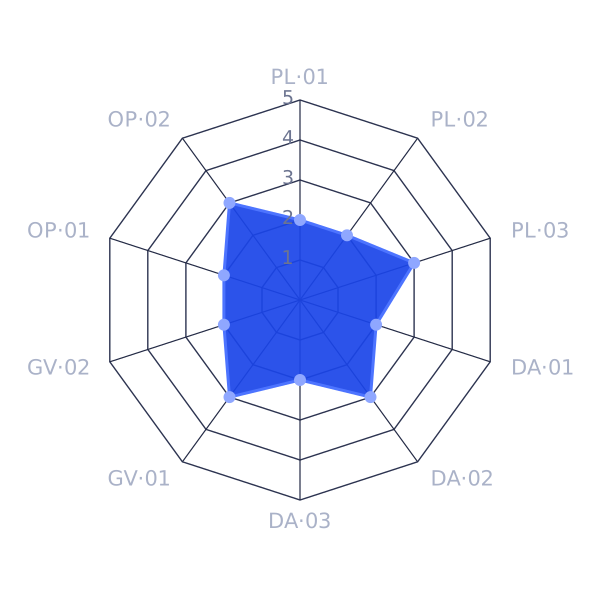
All ten areas on one view. The profile below is an illustrative sample, not client data.

Sample modernization readiness scoreIllustrative

A ten-axis radar chart showing an illustrative modernization readiness profile scored one to five, with values listed in the table beside it

Illustrative sample profile · scored 1–5 · not client data

2.4Overall readiness out of 5 · illustrative

  • PL·01Architecture fitRepeatable2
  • PL·02Cloud and platform footprintRepeatable2
  • PL·03Pipeline and DataOps maturityDefined3
  • DA·01Data qualityRepeatable2
  • DA·02Integration and latencyDefined3
  • DA·03AI readinessRepeatable2
  • GV·01Ownership and policyDefined3
  • GV·02Catalog and lineageRepeatable2
  • OP·01Cost and consumption managementRepeatable2
  • OP·02Skills and run modelDefined3

The pattern that matters here is AI readiness at 2 against pipeline maturity at 3. Teams in this shape are often competent at moving data and under-equipped to serve AI workloads with it — which means the migration scope should be set by governance and quality work, not by how many tables need porting.

What you get

A readiness score across all ten areas, a workload inventory ranked by value and effort, a current-versus-target TCO view, and a wave plan.

How it runs

Alongside your platform team rather than pausing delivery, and scoped to the size of your estate.

What happens next

The wave plan is costed and sequenced, so the first migration wave can start against evidence rather than an estimate.

The method

How we run a data modernization program

Five stages, run by one accountable team, in waves rather than a single cutover. The last two are where many programs change hands.

Stage 01

Assess

Score the ten readiness areas, inventory the workloads, and establish the TCO baseline the program will be measured against.

Stage 02

Design

Target architecture — lakehouse, mesh, fabric or hub — with platform selection driven by workload, regulation and existing investment rather than by partnership.

Stage 03

Migrate in waves

Workload by workload, with parallel-run validation. The modern platform operates alongside the legacy system until consumers confirm parity.

Stage 04

Govern

Quality, catalog, lineage and policy implemented as running controls — so AI readiness is a property of the architecture, not a later project.

Stage 05

Operate

We run the modernized estate through D&A operations and support, managing consumption cost and re-measuring against the baseline we started from.

The complete modernization lifecycle

Many modernization engagements end at cutover, after Stage 03. Governance becomes a follow-on project that never gets funded, consumption cost drifts, and within two years the estate needs modernizing again. Stages 04 and 05 are the difference between a migration and a modernization — and they are why we baseline TCO before anything moves.

Accelerators

Accelerators that shorten data modernization

Migration cost is mostly conversion labor. These are the tools we bring to reduce it — and they are why wave plans compress rather than slip.

Abstract light streaks suggesting fast data movement

Flash Migrate

Swift, smart and secure migration tooling, with dedicated paths for Databricks migration and Power BI migration, and automated schema conversion.

A Power BI style report tile on a blue grid

BI Converter

Converts reports and semantic models between BI platforms, so the reporting layer moves with the data in an analytics modernization. Reduces manual rebuild effort.

A glowing data cube among dark blocks

Automated Quality Analyzer

Profiles and validates data through the migration, with source-to-target validation and parallel-run comparison, so parity is demonstrated rather than asserted.

Bright streaming light trails

Real-time Data Streamer

Streaming ingestion for workloads where batch windows are the constraint rather than the platform. Low-latency ingestion across streaming and batch patterns.

A cloud icon over a glowing data network

Cloud Cost Monitor

Consumption monitoring from day one, with consumption tracking and cost anomaly alerting, so the TCO case survives contact with a consumption-priced platform.

Strategy

Data Modernization Strategy Demands a Cultural Shift

Modernize & Thrive

Infocepts’ data modernization services aren’t just about technology; they are a shift in mindset towards a data-first strategy.

We elevate data as the central pillar in every business decision, transforming organizational culture and decision-making processes, going beyond infrastructure and projects to create a modern data architecture.

Vision + Technology

We offer more than just a data modernization strategy; we partner with our clients to guide them on a transformative journey toward a cloud-ready, modern data platform architecture.

Our data strategy focuses on minimizing technical debt while fostering scalable growth, and our solutions are not only tailored to meet today’s needs but are also strategically designed with a forward-looking approach to capitalize on future data sharing opportunities. For media companies, our blog explains the technical debt nobody is pricing in.

Simplified & Optimized

In the complex world of data & analytics, our data modernization services bring clarity and simplification.

Our strategic data modernization services harmonize business and IT strategies to forge a cohesive vision uniquely suited to each client’s specific needs and bridge the gap between desired business insights, and the modern data platform needed to realize them.

The Result? Accelerated insights & smarter decisions, propelling businesses forward in the race of competition.

Platforms

Platforms we modernize to

We are platform-agnostic by design. Selection follows your workloads, your regulatory position and your existing investments — not our partnership tiers.

Strongest fit for SQL-first analytics estates and data sharing across business units.

  • Warehouse consolidation
  • Secure data sharing
  • Cortex for AI workloads

Strongest fit where data science and ML workloads sit alongside analytics on one lakehouse.

  • Lakehouse architecture
  • Legacy warehouse migration
  • Unity Catalog governance

Strongest fit for Microsoft-aligned enterprises already standardized on Power BI and Azure.

  • Fabric adoption
  • Power BI modernization
  • Purview governance

Strongest fit where full ecosystem control and breadth of managed services matter most.

  • Redshift and S3 estates
  • Glue and Lake Formation
  • Migration programs

Also considered where it fits the workload profile: Google Cloud — BigQuery estates and streaming analytics. All partnerships

The decision

Lift-and-shift vs. modernization

If you are comparing proposals, this is the distinction that decides whether you are modernizing or relocating.

How the two approaches differ across a program (typical patterns)
Dimension Lift-and-shift migration Infocepts: modernization in waves
What moves Everything, as-is. Scope set by what exists. What the workload inventory justifies. Scope set by value and effort.
Technical debt Moves with the data, onto a more expensive platform. Addressed in the target architecture before the workload moves.
Cutover risk Often big-bang, with validation after the fact. Wave by wave, with parallel run until consumers confirm parity.
Governance Typically a follow-on project, often unfunded. Implemented as running controls inside the program.
AI readiness Typically a later initiative on top of the new platform. A property of the architecture, designed in from the start.
Where it ends Typically cutover and handover. We govern and operate the estate, and manage consumption cost.

Industries

Data modernization by industry

The target architecture differs by sector because the source systems, the retention rules and the regulatory constraints differ.

Transaction volume and seasonality that break fixed-capacity warehouses.

  • POS and supply chain consolidation
  • Seasonal elastic compute
  • Store and DC data integration

Retail

Proof

Independently rated, not self-declared

4.9Out of 5 · 55 reviews

Gartner®

Gartner Peer Insights

Verified client reviews, as of October 2026. Read the reviews on Gartner.

Highest rated in the category in Gartner’s Voice of the Customer report for Data and Analytics Service Providers, 2020, 2021 and 2022

Databricks Silver Partner · Databricks Brickbuilder Security & Governance Specialization

Snowflake Cortex Code Preferred Partner 2026

Recognized in the HFS Challenger Series 2025 for driving scalable enterprise AI

Data modernization results

Media case study

Media team reviewing ad sales performance

Cloud transformation for ad sales performance

A media conglomerate’s on-premise sales data platform moved to the cloud: 3X faster time to insight and $7.5M saved annually in TCO.

Media case study

Media and events audience analytics

A 360-degree, privacy-safe view of audience

Fragmented audience data unified on Databricks into one privacy-safe view: 42% higher audience engagement and 30% faster time-to-market.

Manufacturing case study

Snowflake cost optimization results

Snowflake cost optimization for a manufacturer

$43,686 in annual savings from warehouse tuning, right-sizing and Time Travel governance, with performance held steady.

See all case studies across retail, CPG, financial services, media, manufacturing and life sciences.

A data engineer reviewing a data platform on a large illuminated screen

The expensive mistake is deciding the platform before you have inventoried the workloads. Most estates we assess contain a large share of reporting nobody has opened in a year — and paying to migrate it is how a modernization business case quietly disappears.

Data Modernization practiceInfocepts

Workload inventory before platform selection

Waves and parallel runs, not big-bang cutover

Governance inside the program, not after it

4.9 / 5 from 55 verified reviews on Gartner Peer Insights

Start here

Begin your data modernization journey

Ready to modernize your data? Book a strategy session with us today to begin discussing a data modernization plan for your business.

Or download the Cloud Roadmap for Analytics first.

Procurement

How to choose a data modernization partner

Six questions that separate proposals quickly. Ask every bidder, including us.

01

Is platform selection independent?

A partner tied to one platform will recommend it. Ask how selection is made and what would make them recommend against their own alliance.

02

How is scope decided?

If the answer is “everything in the current estate,” the business case is already weakened. Ask for workload inventory before scope.

03

What happens at cutover?

Big-bang or waves. Ask specifically how parity is proven to consumers before the legacy system is switched off.

04

Is governance in scope or after it?

Governance deferred is governance unfunded. Ask whether quality, catalog and lineage ship inside the program.

05

Who manages consumption cost?

Consumption pricing moves cost from capex to a monthly surprise. Ask who monitors it and from which day.

06

Do they stay?

Ask whether the partner operates the estate afterwards, or hands it back. The answer changes the two-year total.

Questions

Data Modernization FAQs

Eleven questions leaders ask before commissioning a data modernization program.

Last reviewed October 2026 by the Infocepts Data Modernization practice.

Cloud migration is moving infrastructure or applications from on-premise to cloud. Data modernization is broader – it includes cloud migration but also redesigning architecture, modernizing pipelines, implementing governance, and changing the operating model. A pure cloud migration without modernization typically moves technical debt to a more expensive platform.

It depends on the size of the estate and how many workloads justify the move. A pilot or proof of concept usually takes a few months; a full enterprise program runs in waves over a longer period, and priority workloads typically deliver business value well before the last wave completes. The readiness baseline gives you a wave plan with durations for your estate.

Cost is driven by five things rather than by a list price: the number of workloads actually in scope after inventory, how much schema and report conversion is manual versus accelerated, how many source systems integrate, the governance and quality work required to make the target AI-ready, and how long the legacy platform runs in parallel. A readiness baseline sizes all five before anyone commits. Rationalizing scope at that stage is usually the largest single cost reduction available to the program.

The return depends on the starting estate, but it comes from two places: lower total cost of ownership as legacy licensing, hardware and specialist maintenance are retired, and faster analytics delivery on the new platform. Harder-to-quantify benefits include AI readiness, regulatory agility, and faster M&A integration. The readiness baseline puts a figure on the first two for your estate before you commit.

Four properties: quality that is measured and monitored rather than assumed; governance with named ownership, lineage and access control that runs automatically; latency low enough for the decision being supported; and a semantic layer that gives the model the same definitions the business uses. A modernized architecture – lakehouse, mesh, or fabric – makes these architectural properties rather than per-project effort, which is the difference between one AI pilot working and many scaling.

Media companies add requirements most industries don’t: content rights and licensing data, multi-version assets, real-time ad and delivery decisions, and audience privacy rules such as GDPR and CCPA. Modernization has to build those into the data model from the start. Read our guide to data modernization for media.

The right platform depends on your existing investments, regulatory requirements, and analytics maturity. Snowflake leads for SQL-first analytics, Databricks for data science and ML, Microsoft Fabric for Microsoft-aligned enterprises, and AWS or Google Cloud for full ecosystem control. Our consultants are platform-agnostic and select based on your situation.

We use parallel-run patterns where the modern platform operates alongside the legacy system until consumers validate parity. Cutover happens workload by workload rather than as a single big-bang event. Critical workloads receive additional reliability engineering before migration.

Often yes. Many modernization programs retain BI tools, source systems, and existing reports while modernizing the underlying data platform and architecture. The decision depends on whether the existing tools can integrate with the modern platform and whether they meet emerging needs.

Ask six questions of every bidder: is platform selection independent of their alliances, how is migration scope decided, how is parity proven at cutover, is governance inside the program or deferred, who manages consumption cost from day one, and do they operate the estate afterwards or hand it back. The last question usually changes the two-year total more than the day rate does.

Book a strategy session below, or start with the readiness baseline if you would rather have a workload inventory and a costed wave plan before committing to a platform. Either way you get a written summary of scope before any agreement is signed.

Begin Your Data Modernization Journey Today

Insights

Insights & Resources

Blog

Data Modernization for Media: The Technical Debt Nobody’s Pricing In
Read More

Case Study

How a Global Media & Events Company Built a 360-Degree, Privacy-Safe View of Its Audience
Read More

ebook

Pragmatic Tips to Rationalize your D&A Landscape
Read More

ebook

Cloud Roadmap for Analytics
Read More

We'd Love to Hear from You!

Open Popup