
For years, one question continued to define conversations between publishers and advertisers:
“Does your audience actually overlap with ours?”
The challenge was never a lack of data. Publishers had rich first-party behavioral signals. Advertisers had deep customer intelligence. The real problem was that the data couldn’t be shared safely, compliantly, or at scale.
For most of my career, the honest answer was simple:
We can’t. Not safely.
Today, that reality is changing.
The rise of Audience Intelligence Platforms and clean room architectures is redefining how publishers, advertisers, and media organizations collaborate on data-unlocking privacy-safe audience intelligence without exposing sensitive customer information.
At Infocepts, we’ve been building production-grade audience intelligence environments long before native clean room tooling became mainstream. What began as custom privacy-first architectures has evolved into scalable intelligence ecosystems designed for measurable business impact.
What’s Changing in Audience Intelligence
Traditional audience targeting models are becoming increasingly ineffective in a privacy-first world.
Third-party cookies are disappearing. Consumer expectations around data privacy are rising. Regulatory complexity continues to grow. At the same time, advertisers are demanding deeper audience insights, better attribution, and measurable outcomes.
This shift has created a new reality:
Organizations can no longer rely on fragmented datasets and isolated analytics environments. Instead, they need secure ways to collaborate on audience intelligence while maintaining governance, privacy, and control.
That’s where clean rooms and modern audience intelligence platforms are driving real transformation.
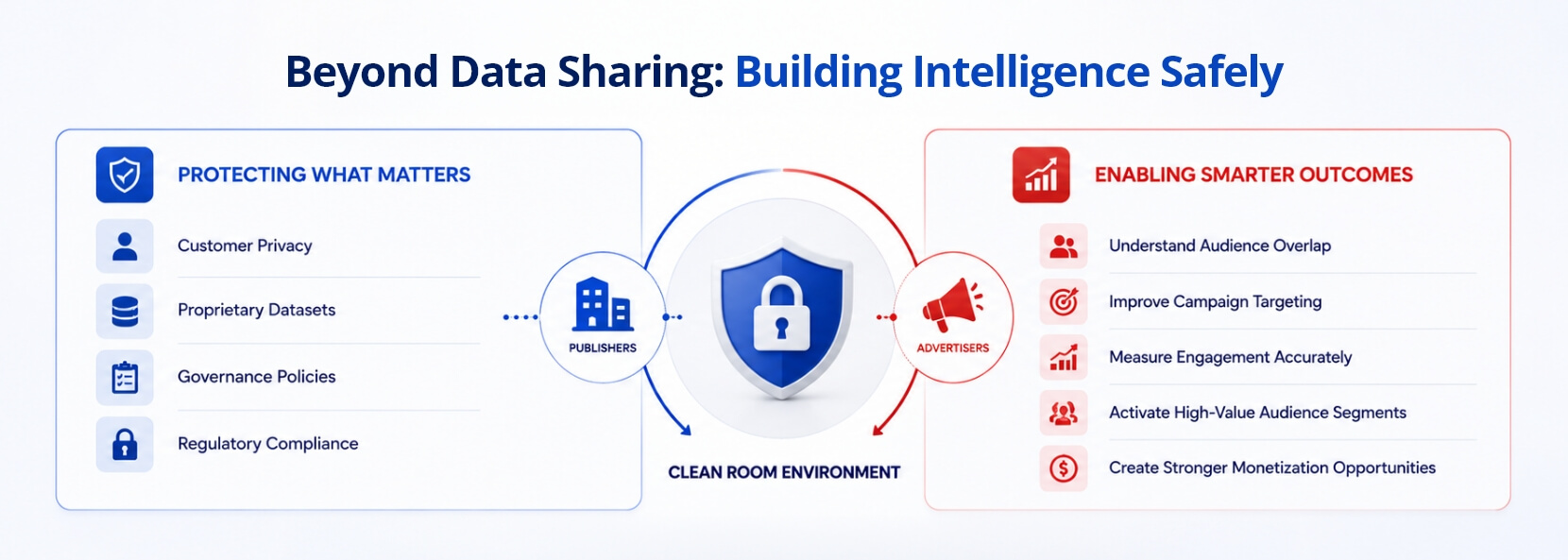
Beyond Data Sharing: Building Intelligence Safely
Modern audience intelligence isn’t simply about moving data between organizations.
It’s about enabling secure collaboration while protecting:
- customer privacy
- proprietary datasets
- governance policies
- regulatory compliance
A well-designed clean room environment allows publishers and advertisers to:
- understand audience overlap
- improve campaign targeting
- measure engagement more accurately
- activate high-value audience segments
- create stronger monetization opportunities
– all without exposing raw customer-level data.
The result is a more intelligent, privacy-safe ecosystem built for modern advertising and media collaboration.
The Evolution of Clean Rooms
Early clean room environments were highly customized and difficult to operationalize. Teams often had to build privacy controls, governance frameworks, identity resolution processes, and collaboration workflows from scratch.
In many ways, we were building these environments before native tooling truly existed.
Today, platforms like Snowflake and Databricks have accelerated adoption by introducing native capabilities for secure data collaboration and scalable AI-driven analytics. But technology alone doesn’t solve the problem.
Successful audience intelligence platforms require:
- scalable architecture
- strong governance
- identity resolution
- operational workflows
- audience activation strategies
- cross-functional business alignment
The organizations seeing the greatest success are the ones treating audience intelligence as a long-term strategic capability-not simply a technology implementation.
Why Identity Resolution Matters More Than Ever
One of the biggest challenges in audience intelligence is understanding how fragmented customer signals connect across platforms, devices, and engagement channels.
Without strong identity resolution, even the most advanced analytics environments struggle to create meaningful audience insights.
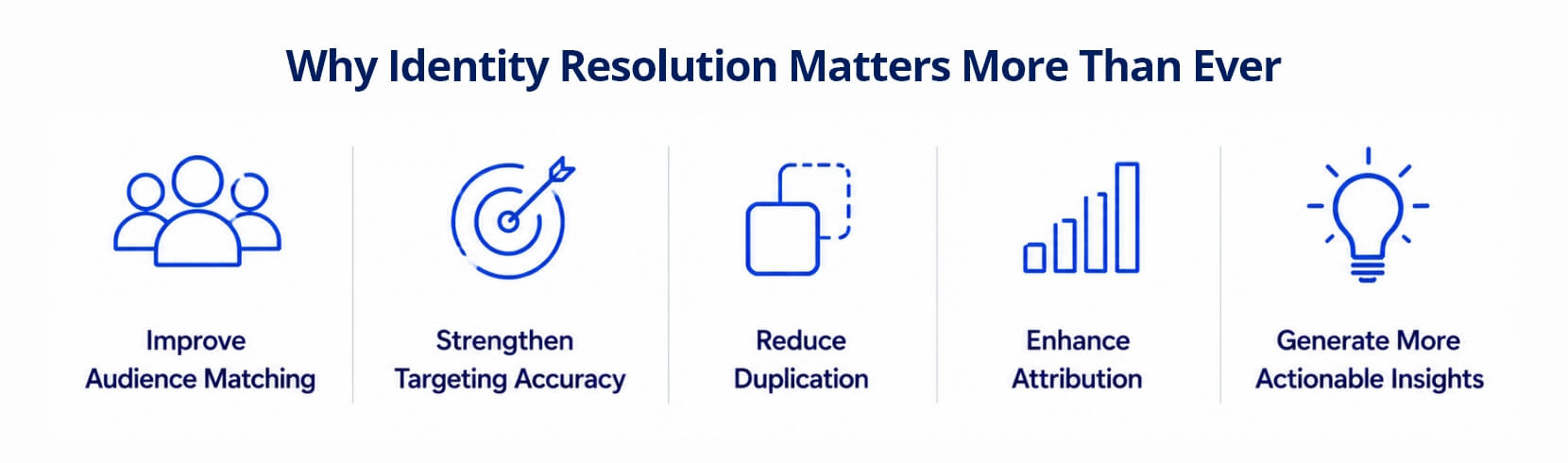 By combining privacy-safe collaboration with intelligent identity frameworks, organizations can:
- improve audience matching
- strengthen targeting accuracy
- reduce duplication
- enhance attribution
- generate more actionable insights
The value isn’t just better analytics-it’s better business decisions.
From Analytics to Actionable Intelligence
The future of audience intelligence goes far beyond reporting dashboards.
Modern platforms are evolving into intelligent environments capable of:
- real-time segmentation
- AI-driven recommendations
- predictive audience modeling
- campaign optimization
- automated activation workflows
The clean room is no longer just a secure collaboration environment.
It’s becoming a full intelligence layer that enables organizations to move faster, collaborate smarter, and create measurable value from their data ecosystems.
Measurable Business Outcomes That Matter
At Infocepts, transformation is outcome-driven.
Organizations leveraging modern audience intelligence platforms are able to:
- improve audience visibility and targeting
- increase advertiser confidence
- accelerate campaign optimization
- strengthen monetization strategies
- improve operational efficiency
- reduce data risk and compliance concerns
- create scalable foundations for AI-driven growth
The impact extends beyond media planning-it fundamentally changes how organizations activate and monetize data responsibly.
The Road Ahead
As privacy expectations continue to evolve, audience intelligence will become one of the most critical capabilities in the media and advertising ecosystem.
The organizations that succeed will be the ones that:
- build trusted data collaboration environments
- invest in scalable AI-ready architectures
- prioritize governance and privacy
- enable faster, smarter decision-making
Audience intelligence is no longer just about understanding audiences.
It’s about building intelligent, privacy-safe ecosystems that drive measurable business outcomes at scale.
Build Audience Intelligence That Goes Beyond Estimates
Whether you’re exploring clean rooms for the first time or scaling an existing audience intelligence strategy, Infocepts helps organizations build privacy-safe, production-grade audience intelligence environments designed for long-term business impact.

Prashant is a Data and AI enthusiast with close to 2 decades in designing and building applications and systems that power enterprise Data & Analytics Platforms. He is proficient in multiple programming languages and has co-created numerous enterprise-grade products in collaboration with major Cloud (Infra & Data) vendors.
Read Full BioRecent Blogs



Infocepts