


The customer doesn’t experience your brand the way your org chart is organized. They don’t think “now I’m in the digital channel, now I’m in the physical channel.” They just think: “I’m shopping at Brand X.”
This seems obvious. And yet the majority of retail organizations are still analyzing their customers through separate digital and physical lenses – running distinct analytics programs for e-commerce and stores, with limited integration between the two.
The result is a fundamentally incomplete picture of the customer – and incomplete pictures lead to bad decisions.
What You’re Missing When You Think in Channels
When your digital analytics team and your store analytics team are working from separate data, each is seeing a partial portrait of the customer. The digital team sees traffic, sessions, conversion, and cart behavior – but not what happens when that digitally engaged customer walks into a store. The store team sees foot traffic and transaction data – but not what the customer was browsing online before they arrived.
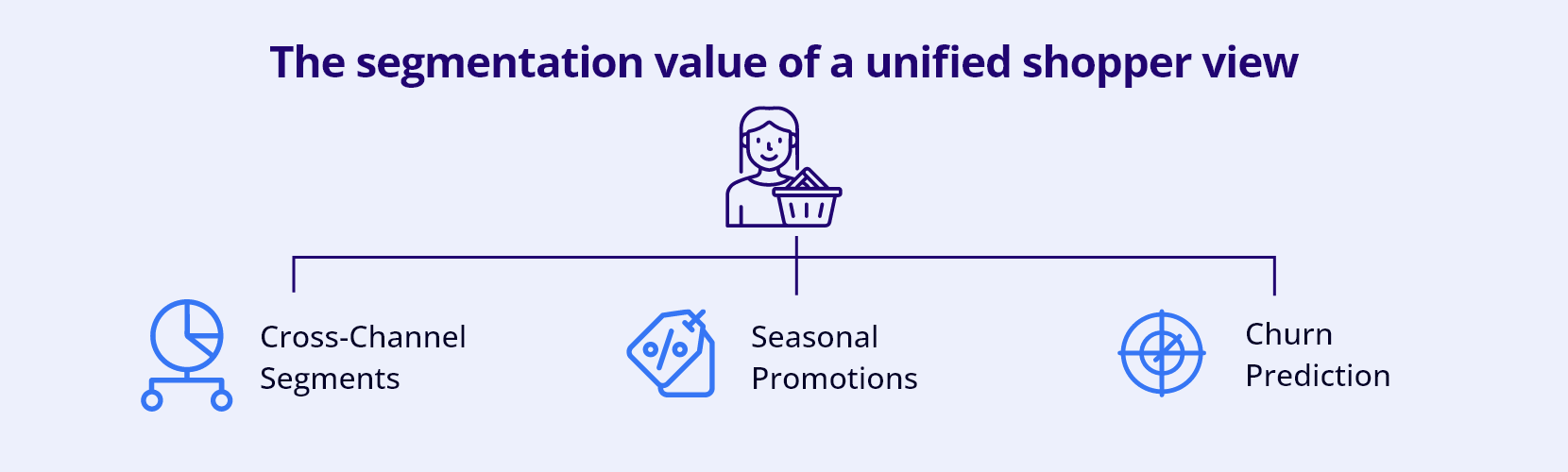
The customers who engage across both physical and digital touchpoints are typically your most valuable customers. They buy more frequently. Their basket sizes are larger. Their lifetime value is substantially higher than single-channel shoppers. When you fail to recognize them as integrated beings – when you send them irrelevant digital communications because your e-commerce platform doesn’t know about their in-store purchases – you’re eroding the relationship without even realizing it.
Building the Unified Customer Profile
The foundational requirement for omnichannel customer intelligence is a unified customer profile – a single record that captures every interaction a customer has with your brand, regardless of where it happens.
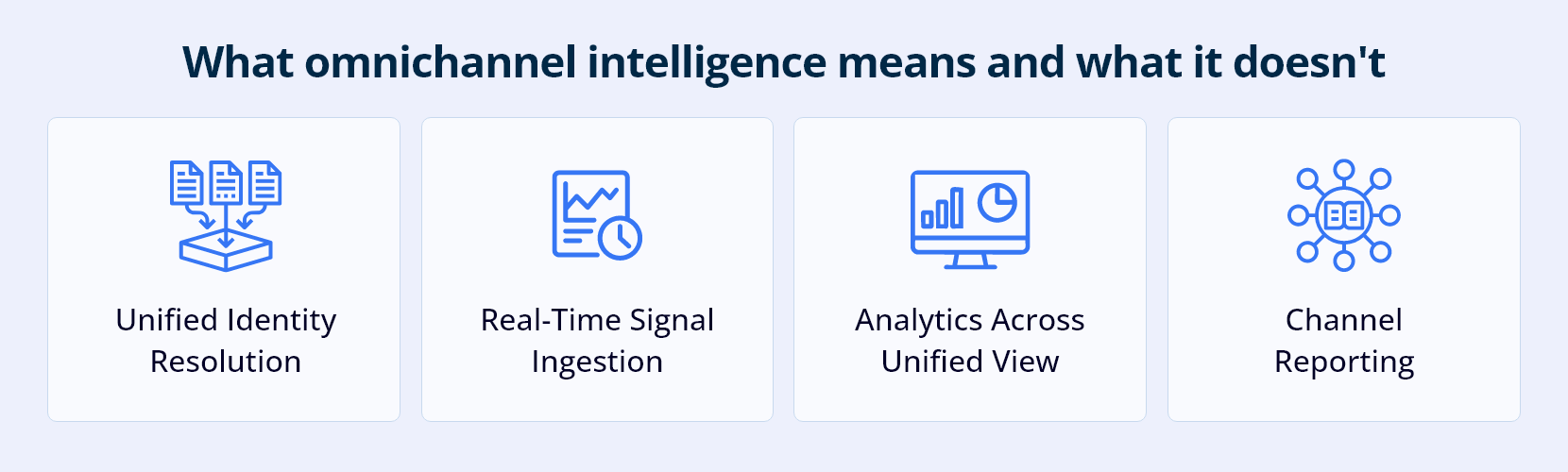
Identity resolution connects records from different systems to the same individual – matching loyalty IDs to email addresses to device identifiers to in-store transaction records. Data integration builds the infrastructure to pull data from POS systems, e-commerce platforms, loyalty programs, and mobile apps into a unified data layer. Behavioral enrichment layers intent signals – browsing data, search queries, app engagement – onto the transactional record. And activation connects the unified profile to the systems that actually reach the customer.
Infocepts specializes in helping retail organizations navigate this journey. Their retail analytics practice has built unified customer data platforms for clients across formats and geographies, with the specific expertise to connect legacy in-store systems with modern digital infrastructure.
What Omnichannel Intelligence Enables
True omnichannel attribution means understanding which touchpoints actually drive purchase decisions across the full customer journey. The difference between knowing “our email drives 12% of online revenue” and knowing “our email drives 12% of online revenue and influences another 8% of in-store revenue among enrolled customers” changes how you think about email investment entirely.
Cross-channel personalization becomes possible when you know a customer has been browsing a specific product category online – allowing you to surface relevant content when they’re identified in-store. Predictive channel optimization tells you which customers are most responsive to in-store engagement versus digital. And omnichannel retention catches at-risk signals across all channels, not just within each channel separately.
The Organizational Dimension
Here’s where a lot of omnichannel analytics initiatives stall: the organizational structure isn’t aligned with the data vision. If your e-commerce team and your store operations team have separate P&Ls and separate KPIs, they have structural incentives to claim credit for the same customers rather than collaborate on serving them.
This is genuinely a leadership challenge, not a technology challenge. The most progressive retailers are adding metrics like “omnichannel customer share of wallet” and “cross-channel engagement rate” to their executive dashboards alongside channel-specific metrics – adding a layer of visibility into the customer experience that a siloed view can’t provide.
Starting Where You Are
Not every retailer can build a fully integrated omnichannel analytics platform in a year. But most retailers can start making meaningful progress with the data they already have. A useful starting point: identity match your loyalty members across channels. If you can identify which customers are shopping in both stores and online – even imperfectly – you’ve already unlocked a significant analytical advantage.
The journey toward genuine omnichannel customer intelligence is a multi-year endeavor. But the organizations that started three years ago are now operating with capabilities that their competitors are only beginning to understand are possible. The customer sees one brand. The sooner your analytics infrastructure reflects that reality, the sooner you can build strategies worthy of it.
Infocepts helps retail organizations build omnichannel customer intelligence capabilities – from unified customer data platforms to cross-channel attribution and personalization. Learn more on their retail solutions page.
Infocepts is a Databricks Silver Partner with Brickbuilder Specializations in Retail, Consumer Goods & Travel, delivering production-deployed omnichannel analytics, customer intelligence, and retail AI solutions on the Databricks Data Intelligence Platform.
Ready to build a unified view of your omnichannel customer?
Discover how Infocepts helps retailers connect physical and digital touchpoints for smarter decisions and personalization

Author
The Infocepts Retail COE brings together data and analytics specialists focused on helping retail and CPG organizations turn complex data into smarter decisions. From demand forecasting and inventory optimization to customer analytics and omnichannel performance, the team works at the intersection of data engineering, AI, and retail strategy.
Read Full BioRecent Blogs



The Enterprise AI & Data Transformation Partner. Delivering measurable business impact globally.
#1 on Gartner Peer Insights · 97.2% client retention