
23%
Enhanced Medication Adherence Rate
77%
Capture of Patient Satisfaction Scores
66%
Reduction in Adverse Drug Event (ADE) Rate
35%
Increase in Medication Reviews Conducted
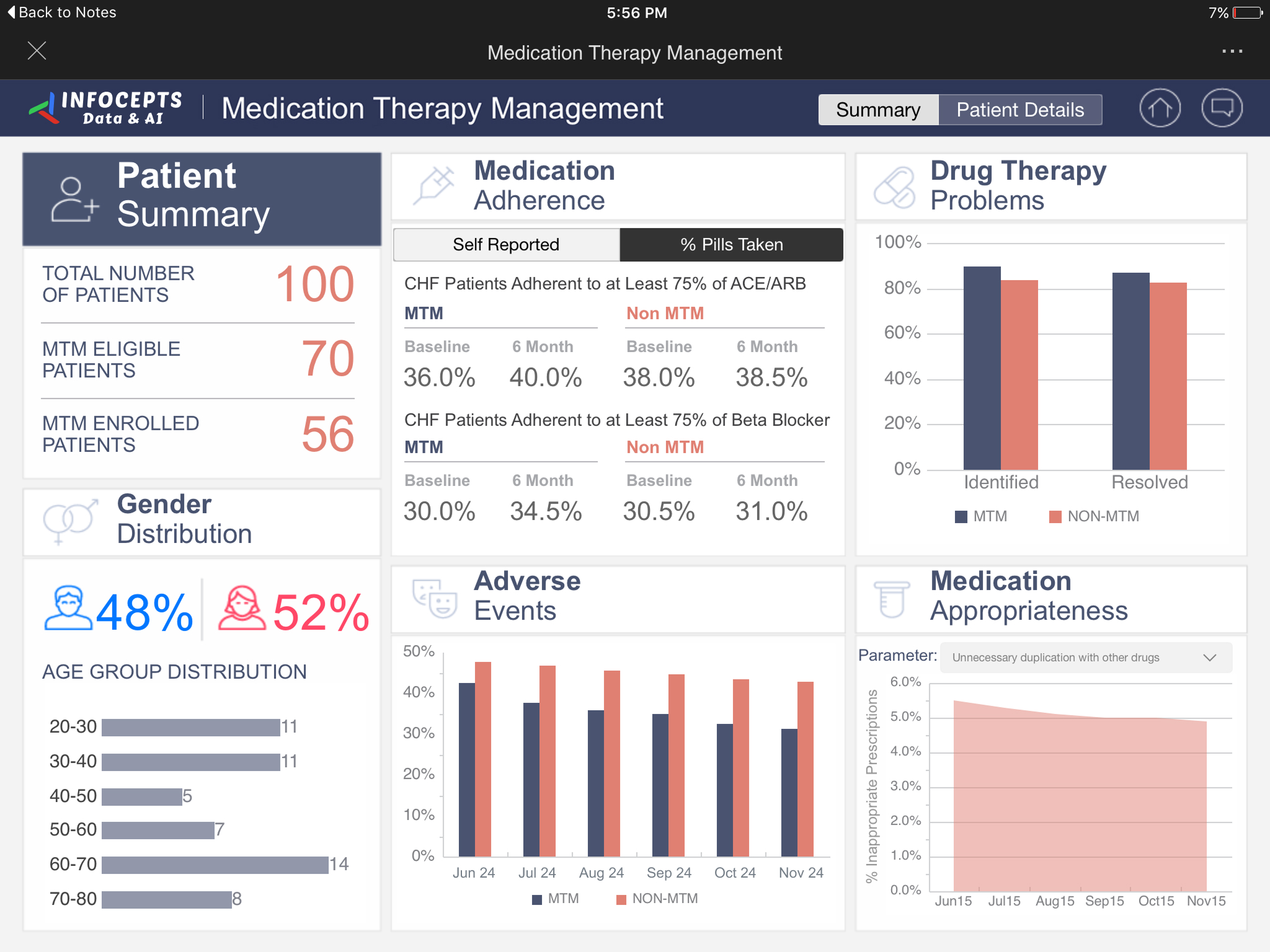
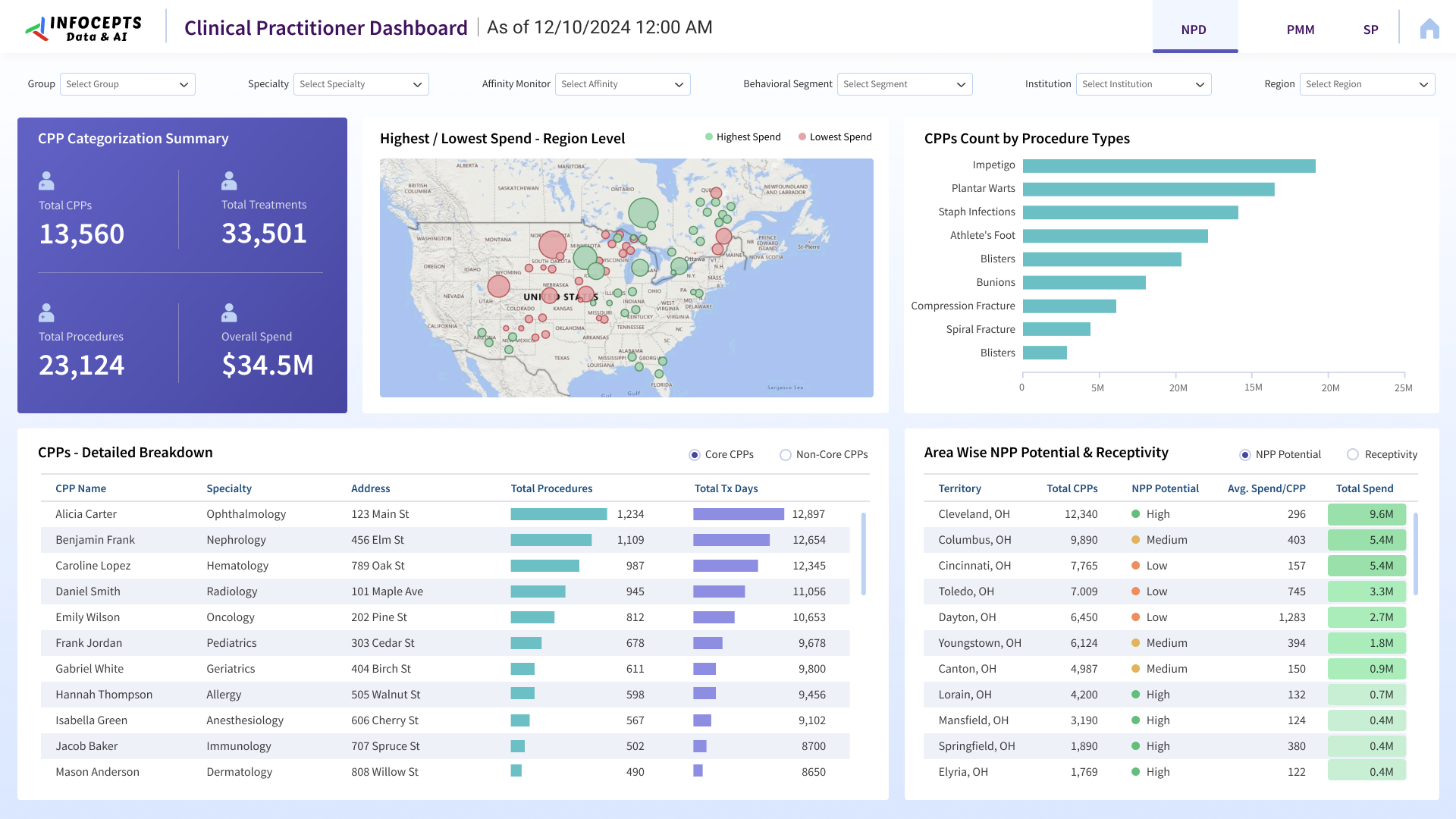
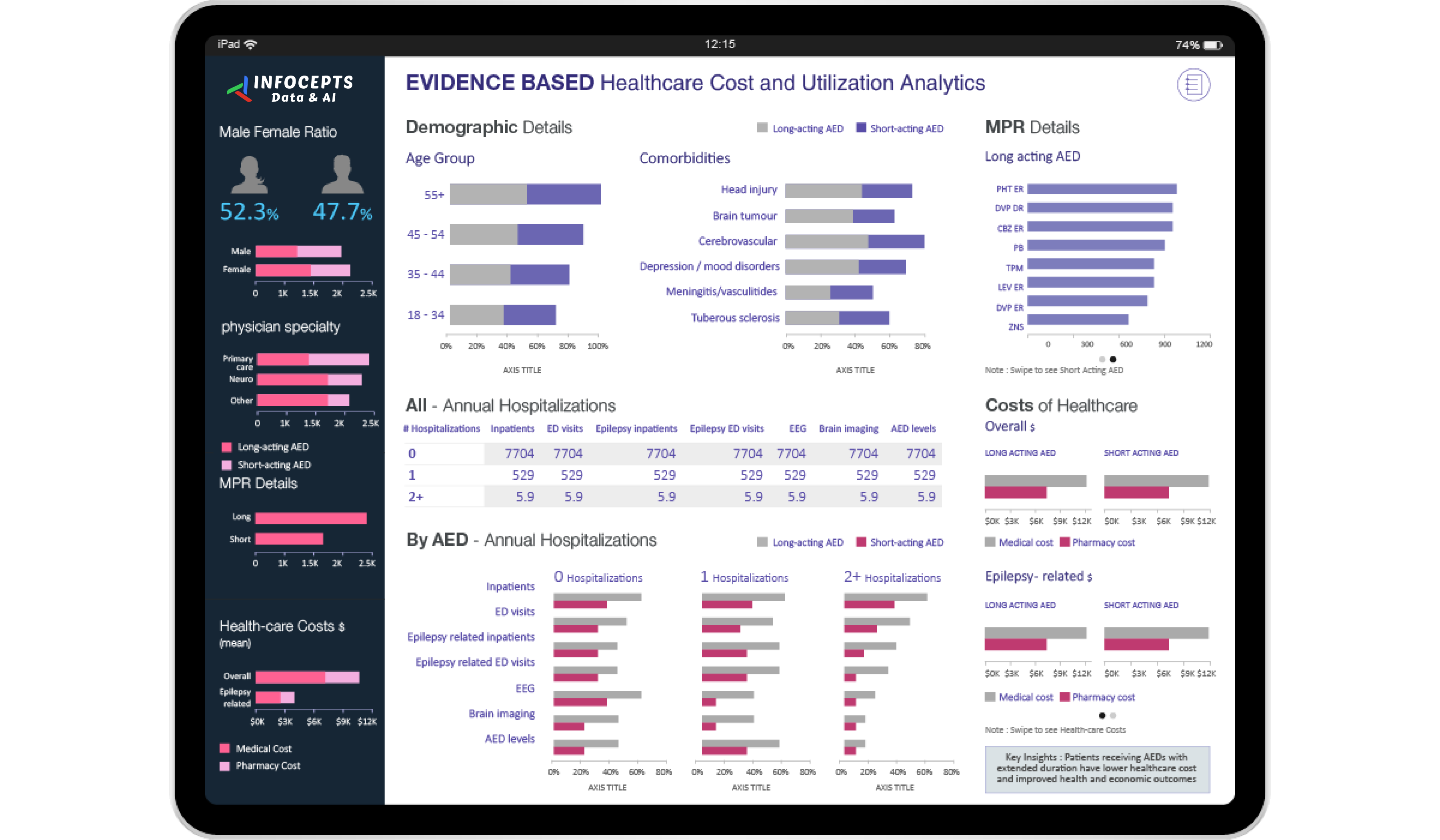
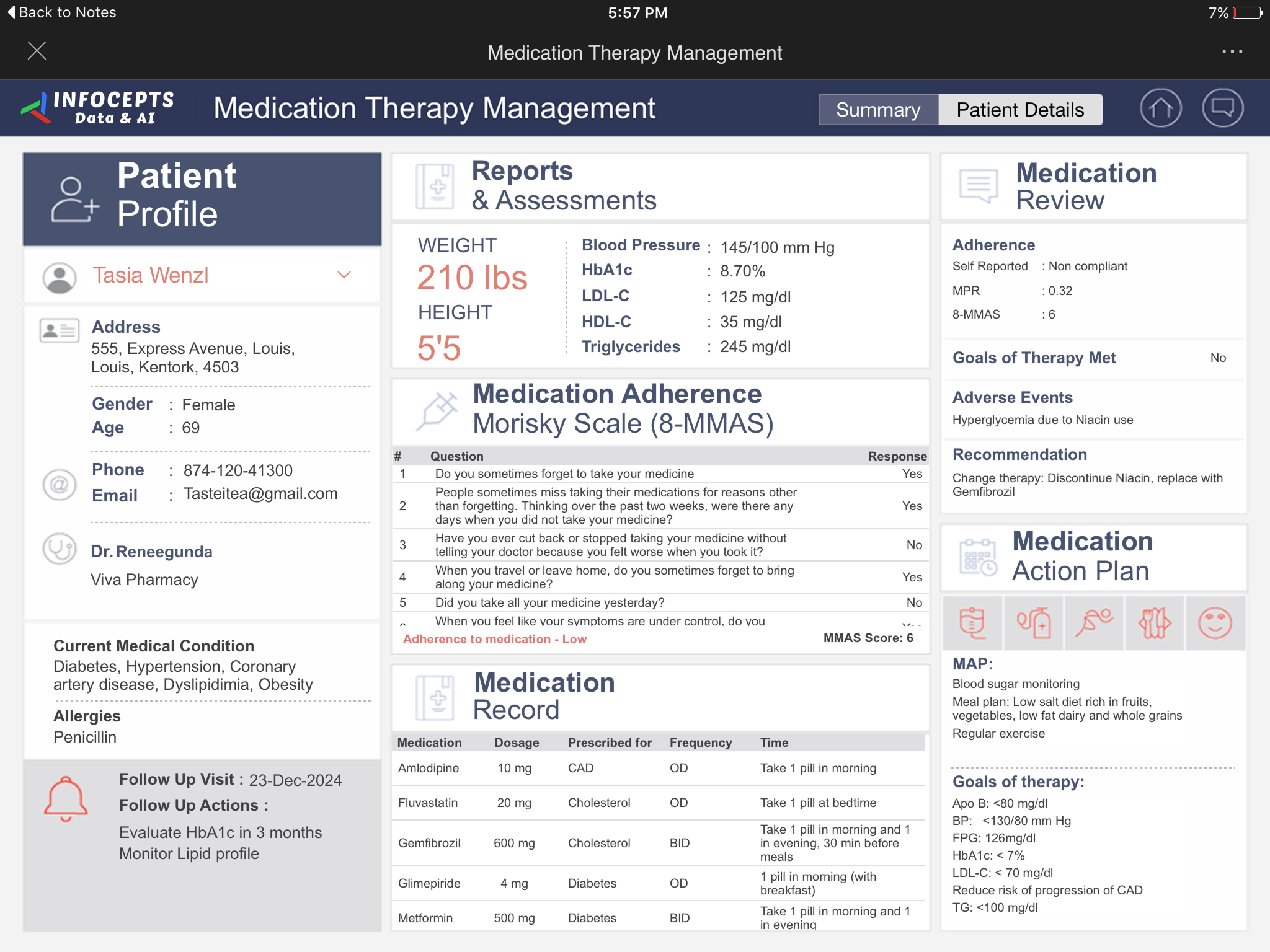
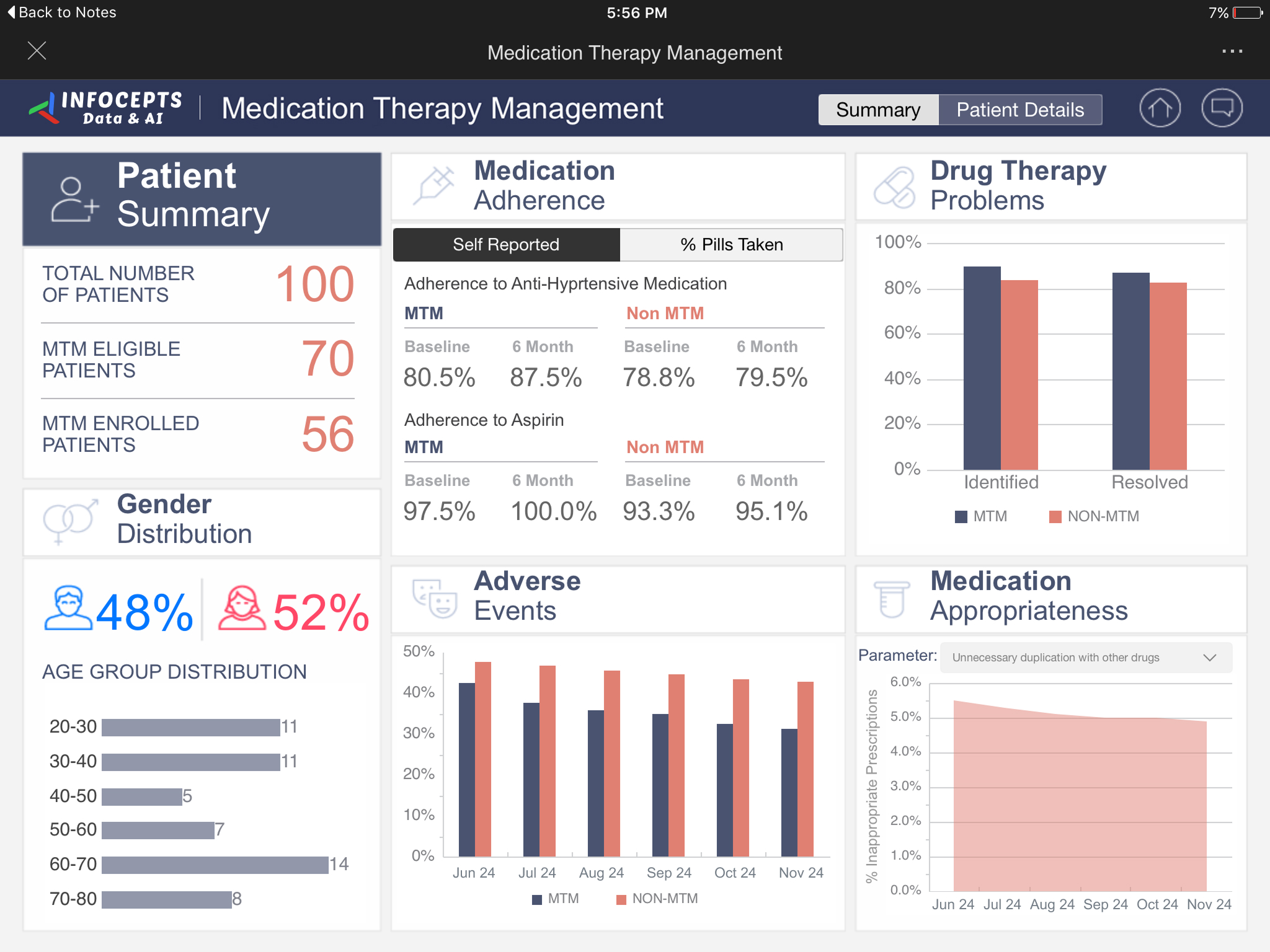
This medication adherence analytics dashboard gives healthcare providers, pharmacists, and care teams one view of how patients follow their medication plans. It also shows therapy measures and potential drug interactions, so teams can decide which plans need a review. Infocepts built it on MicroStrategy.
What problem did this dashboard by Infocepts solve for the care teams?
Care teams manage medication across a patient population, not one prescription at a time. They needed adherence, therapy, and interaction information in one place. Infocepts connected pharmacy and clinical data through data engineering and integration and built a single view, so teams can see which medication plans need attention.
What does the medication adherence dashboard track?
It tracks medication adherence, therapy effectiveness, and potential drug interactions. Interaction checks compare a patient’s full medication list against known interaction data and flag combinations worth a pharmacist or physician review. The dashboard also lists medication reviews conducted and patient satisfaction scores, so teams can follow review activity alongside adherence.
Who uses medication adherence dashboards in healthcare organizations and how?
Pharmacists use them to find medication lists that call for a review. Healthcare providers see adherence across a patient population instead of one prescription at a time. Care teams use the gaps to decide whom to contact first. Each group works from the same view, so reviews and follow up stay coordinated.
What business impact did the care teams see after rollout?
Reported results include a 23% enhanced medication adherence rate and a 35% increase in medication reviews conducted. It also lists 77% capture of patient satisfaction scores. They show review activity and adherence tracking moving in step, with satisfaction data captured alongside.
Key metrics: medication adherence rate, therapy measures, potential drug interactions, medication reviews conducted, and patient satisfaction scores.
Explore more examples in the Life Sciences section, see the patient engagement analytics dashboard, or review the healthcare performance analytics dashboard.
Want a medication adherence dashboard for your organization? Talk to our team about what to track and how to build it.

 Pranali Lanjewar